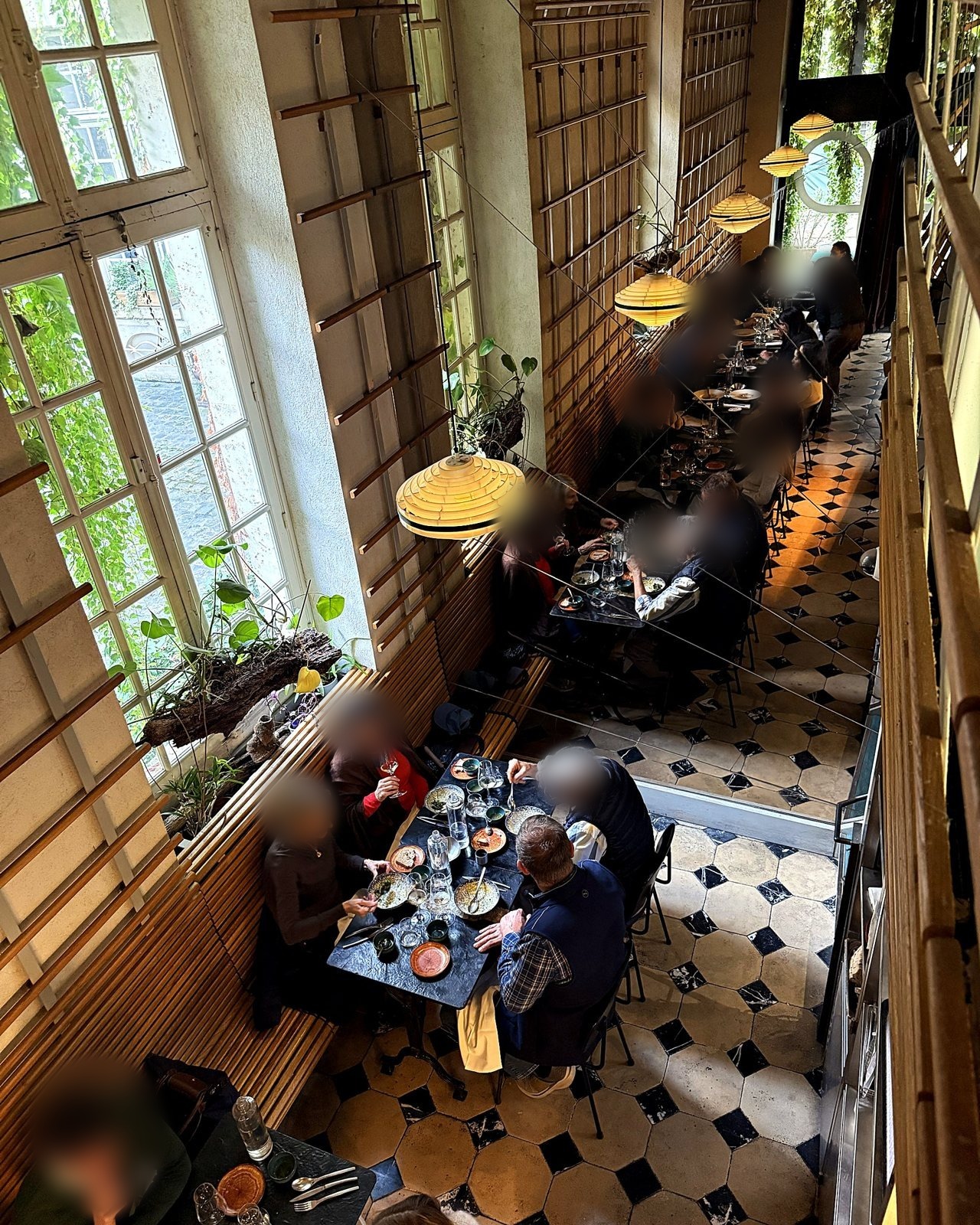
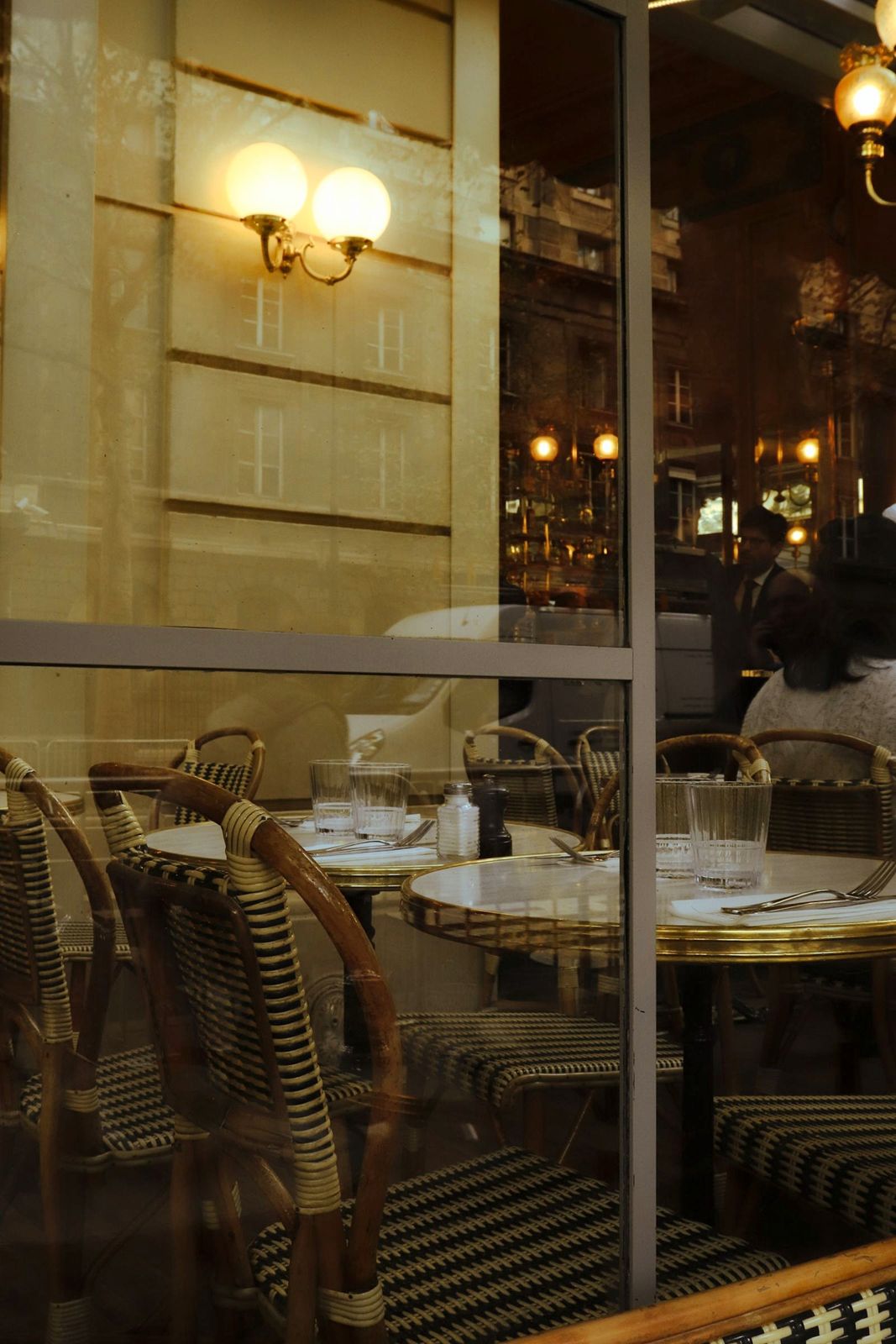
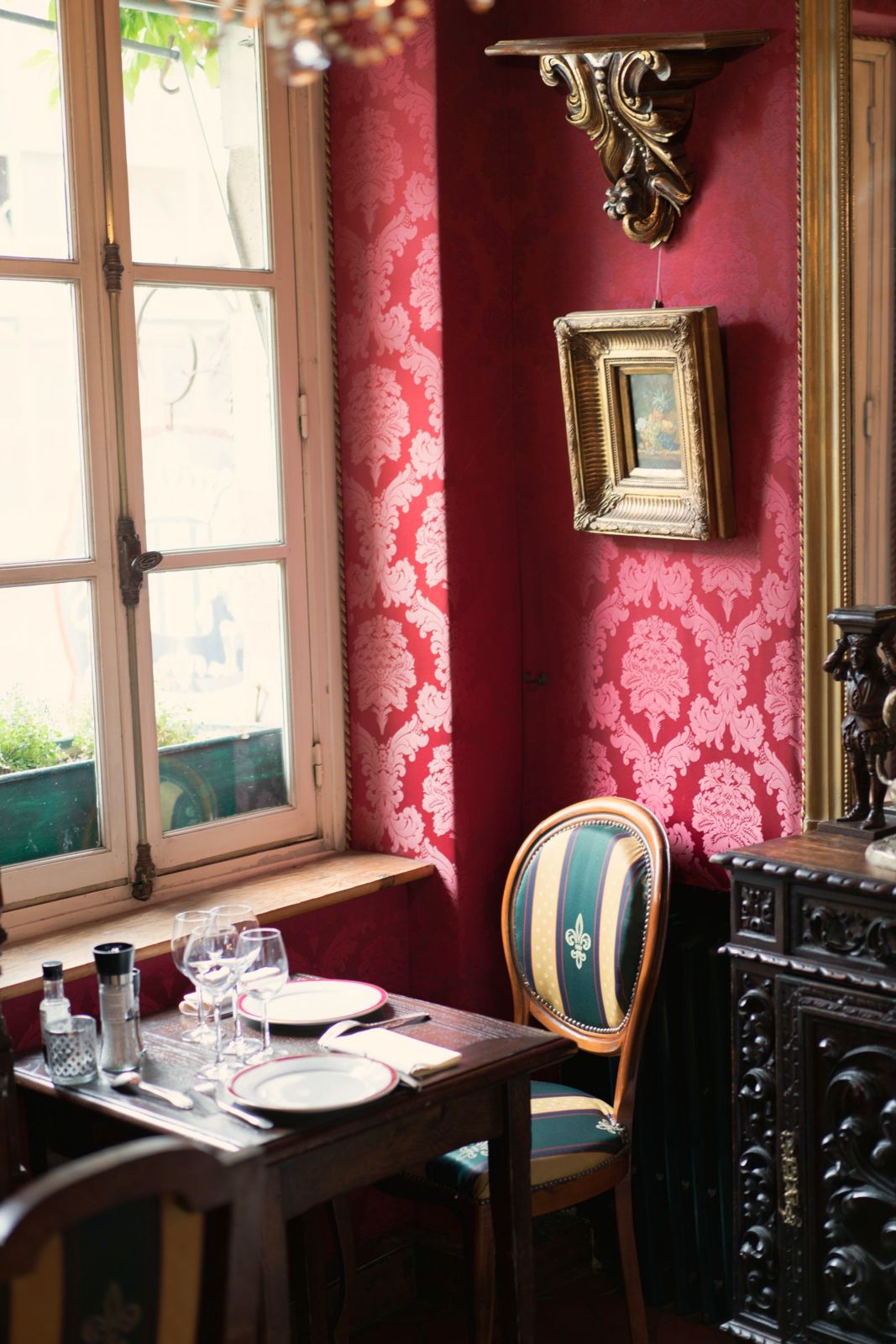
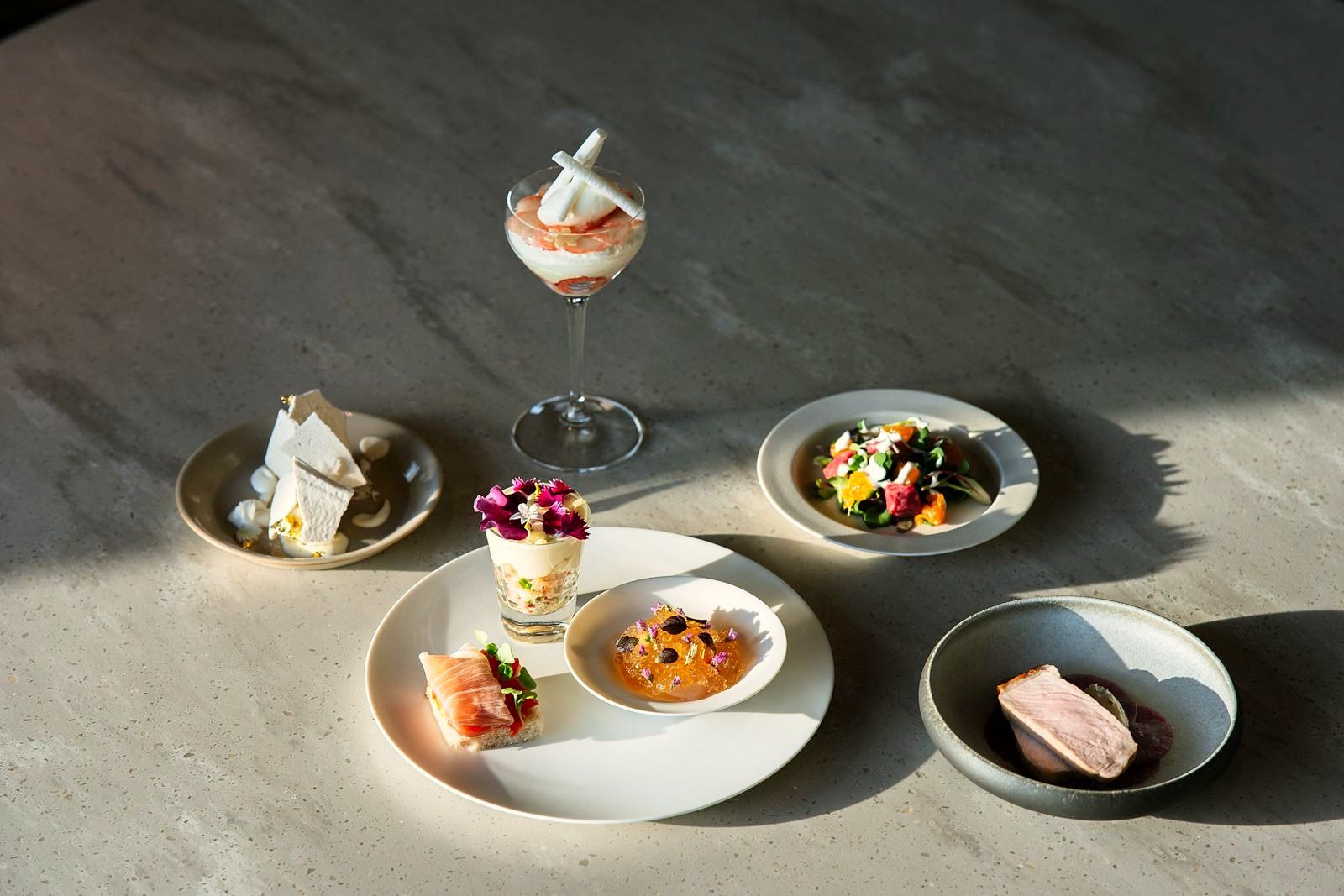
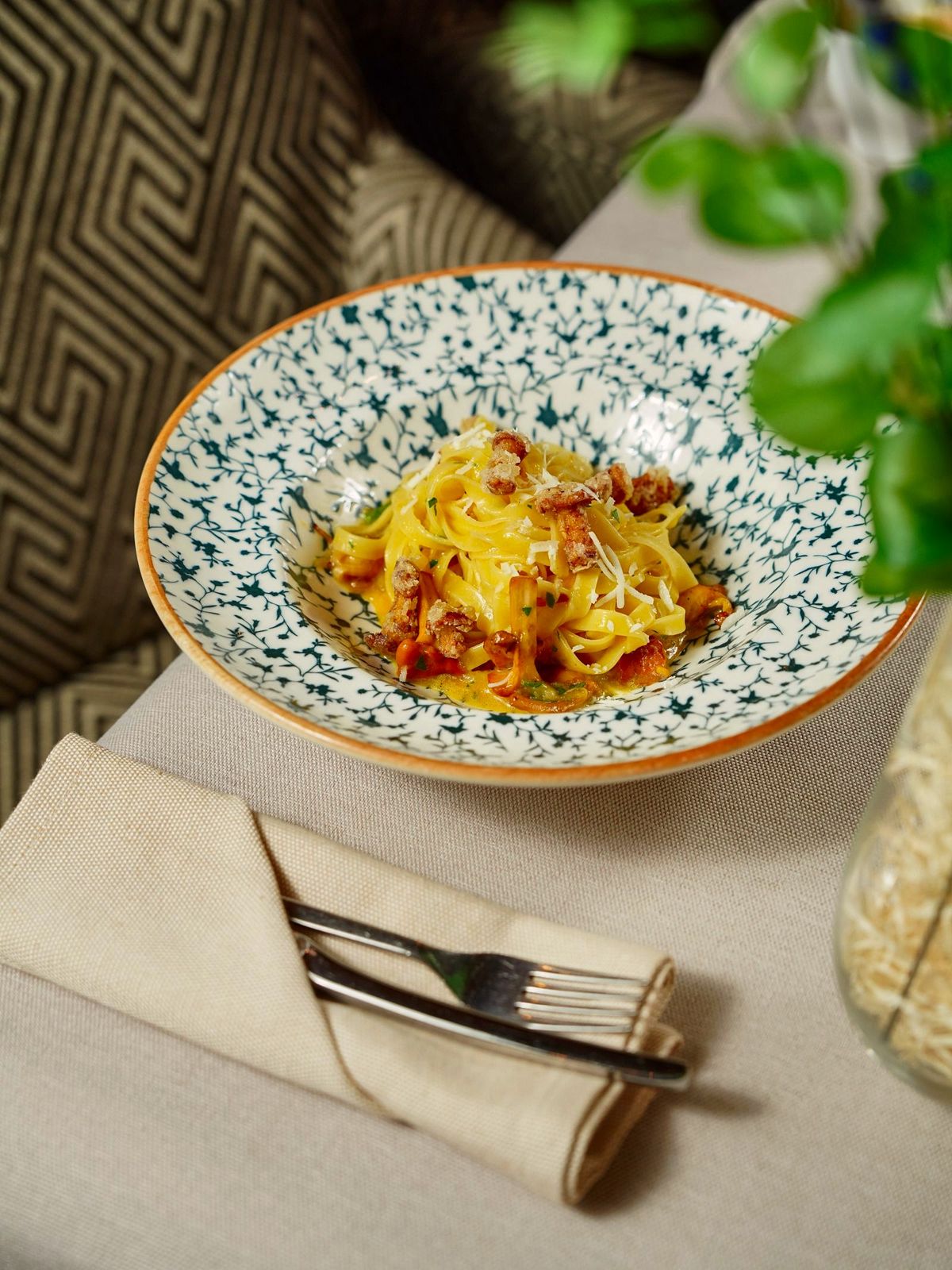
Tables worth crossing a city for, one A-List at a time.
The Paris Edit · A-List Tables
French Bistrots
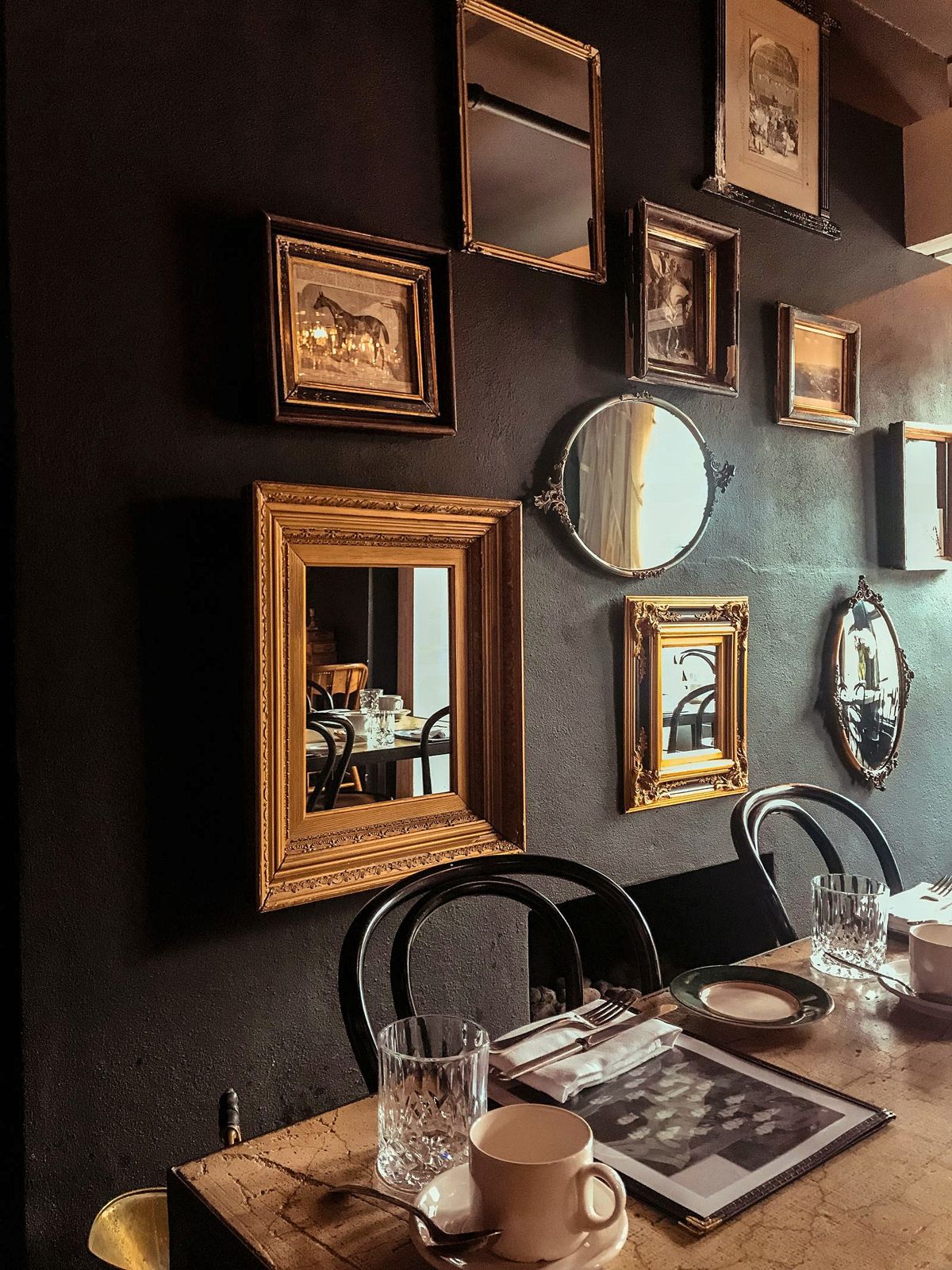
This is my selection of the finest bistrot tables in Paris. It did not come from nowhere: we crossed the major guides and awards, then I made my own choice, by taste, by beauty and by the welcome I found at the table.
Every table here is selected on merit. Some I also visited as a guest of the house, and that is always written in the piece; others enter on merit alone. The order is never a ranking.
Sources: Michelin Guide · Gault&Millau · Le Fooding · Pudlowski · the restaurants’ own websites
The houses of fashion, and the houses of luxury around them, that open their doors to Paris: couture galleries, ateliers, foundations and boutiques worth the visit in their own right.
In alphabetical order, never a ranking. Exhibitions and dates as of November 2026. Temporary images: Pexels. Visits offered by a house are always indicated.
Fashion · 4thAlaïa
Fondation Azzedine Alaïa
Le Marais
The couturier’s own world in the Marais: a gallery where his archive and his collection are shown in changing exhibitions.
On view:Azzedine Alaïa et l’Afrique, 7 July 2026 – 4 January 2027. Open daily, 11am–7pm.
The crystal house in the former hôtel particulier of Marie-Laure de Noailles, reimagined by Philippe Starck: a gallery-museum, a boutique and the restaurant Alain Ducasse Baccarat.
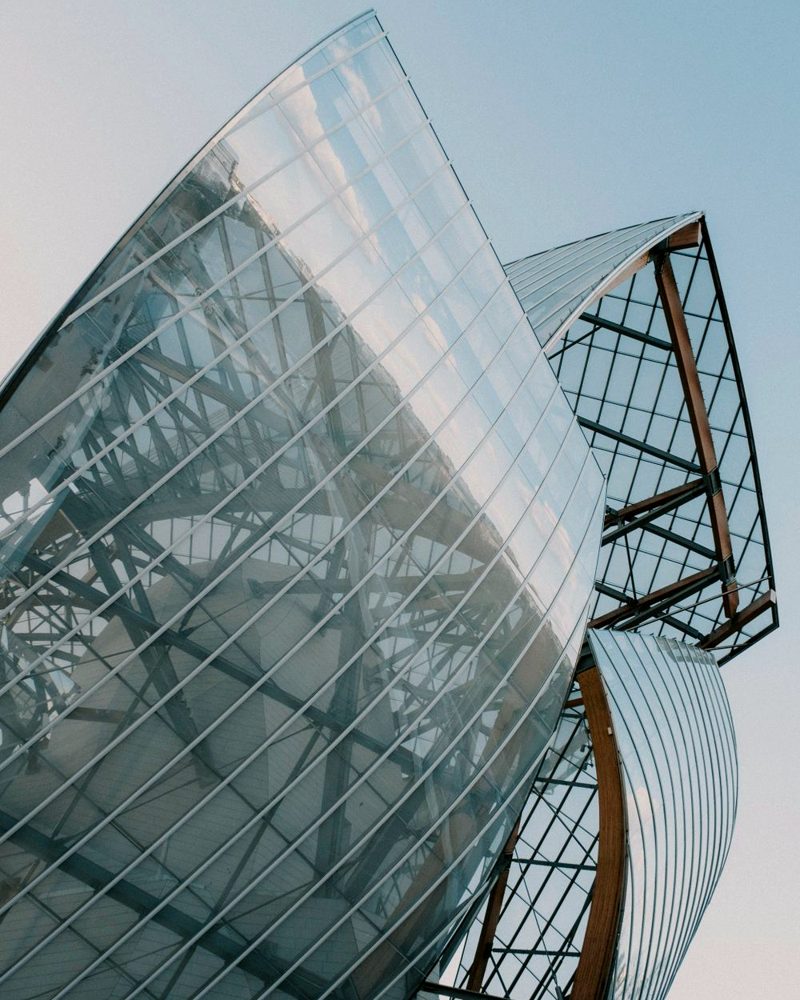
Since 25 October 2025 the foundation has its new home facing the Louvre, in a building reworked by Jean Nouvel. It opened with Exposition Générale, forty years of the collection (until August 2026).
The story of the house, told inside the hôtel particulier on avenue Montaigne where Christian Dior presented his first collection in 1947. The route has been renewed with creations by Jonathan Anderson; Café Dior and the boutique sit alongside.
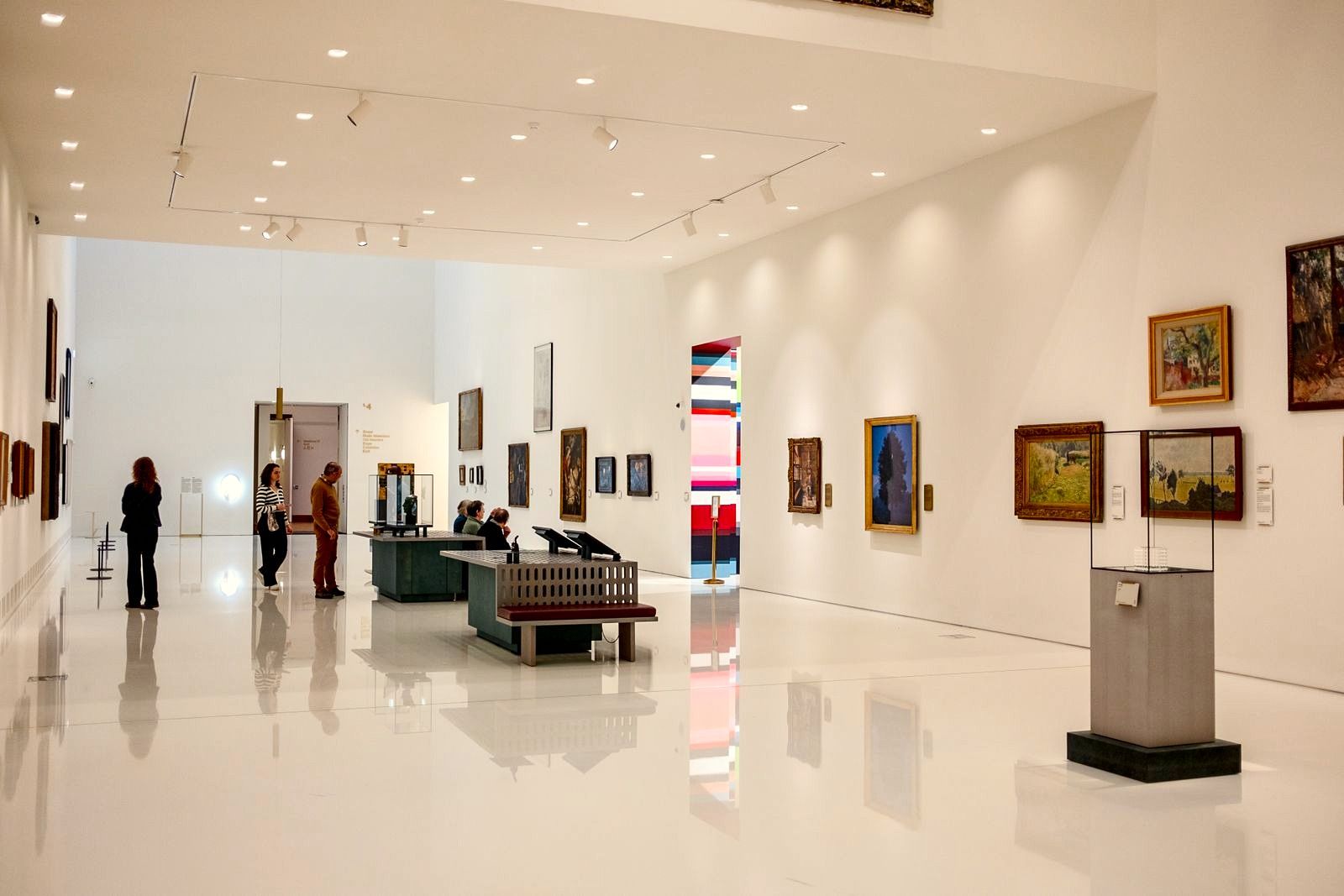
The city’s own museum of fashion, and the context for every other house on this list. I have visited it, and it is one of the most beautiful museums in Paris.
Next:En volume !, 12 December 2026 – 17 October 2027.
A day or a weekend away: châteaux, gardens, Champagne and the wilder corners of France, all within reach of the city.
In alphabetical order, never a ranking. Where to stay: A-List Stays, coming soon. Temporary images: Pexels.
Wine & Champagne · Day or weekendChampagne
Reims & Épernay
The Champagne country
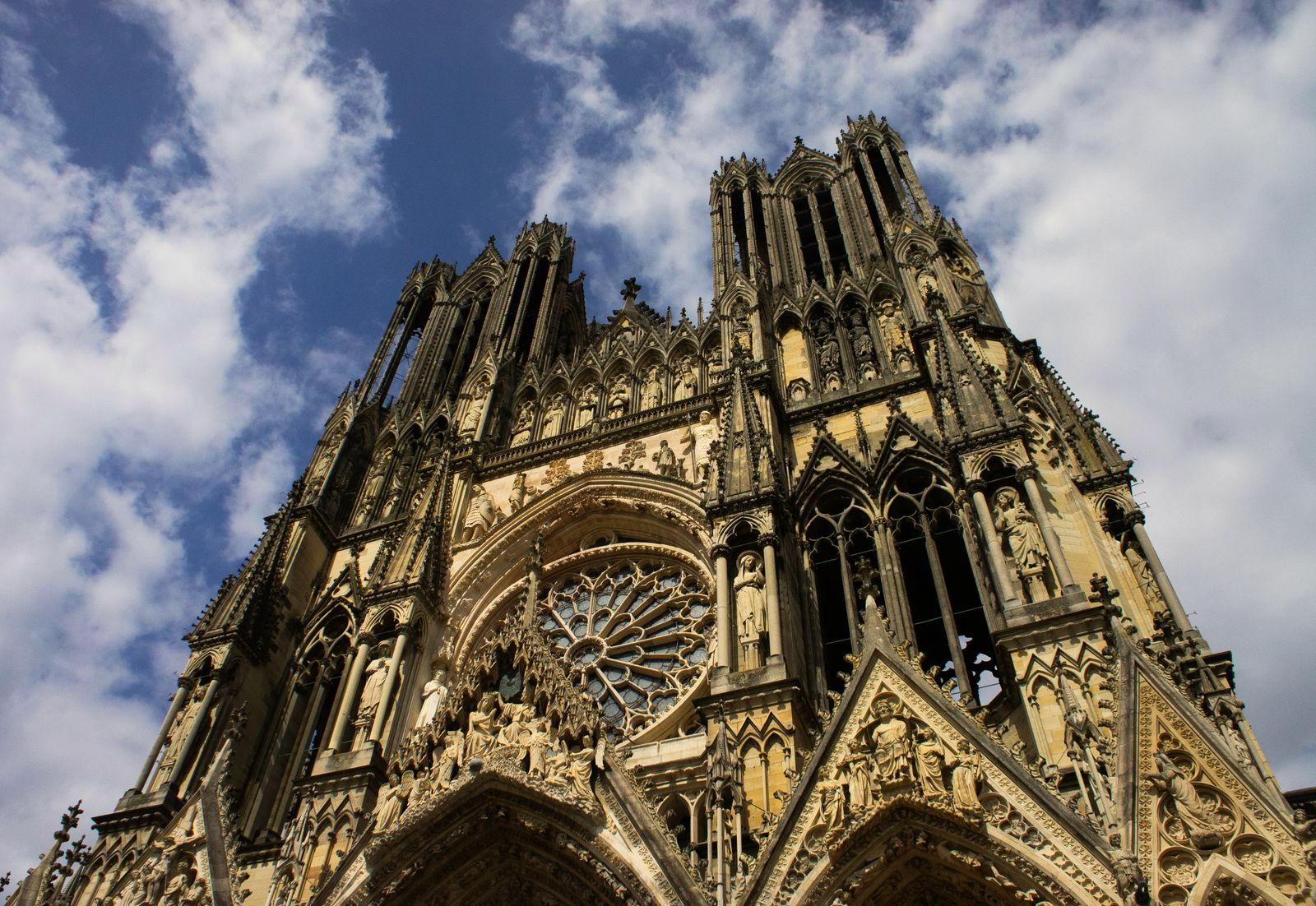
The Gothic cathedral of Reims, the chalk cellars beneath the city and the avenue de Champagne in Épernay, lined with the great houses. Easily reached by TGV from the Gare de l’Est.
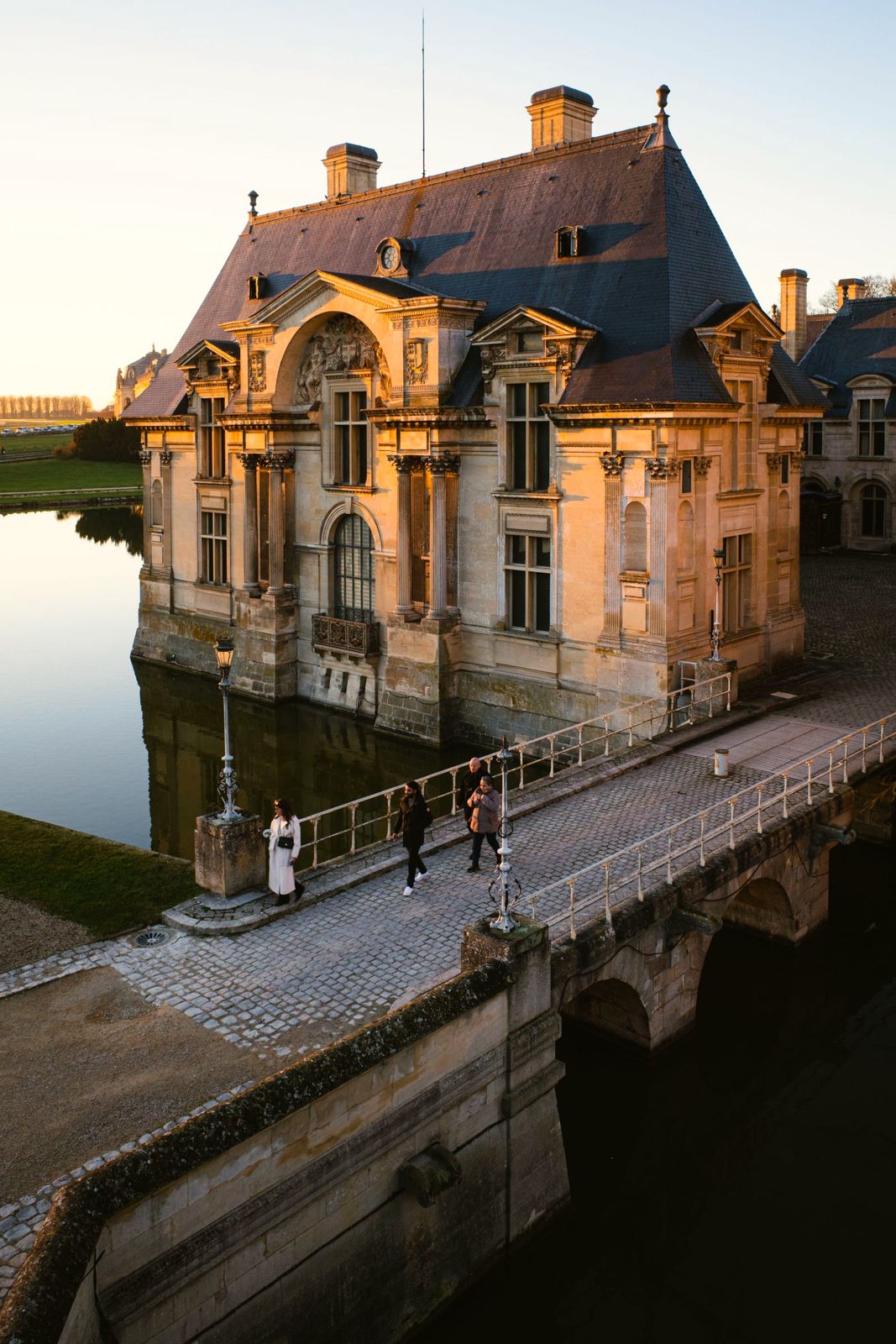
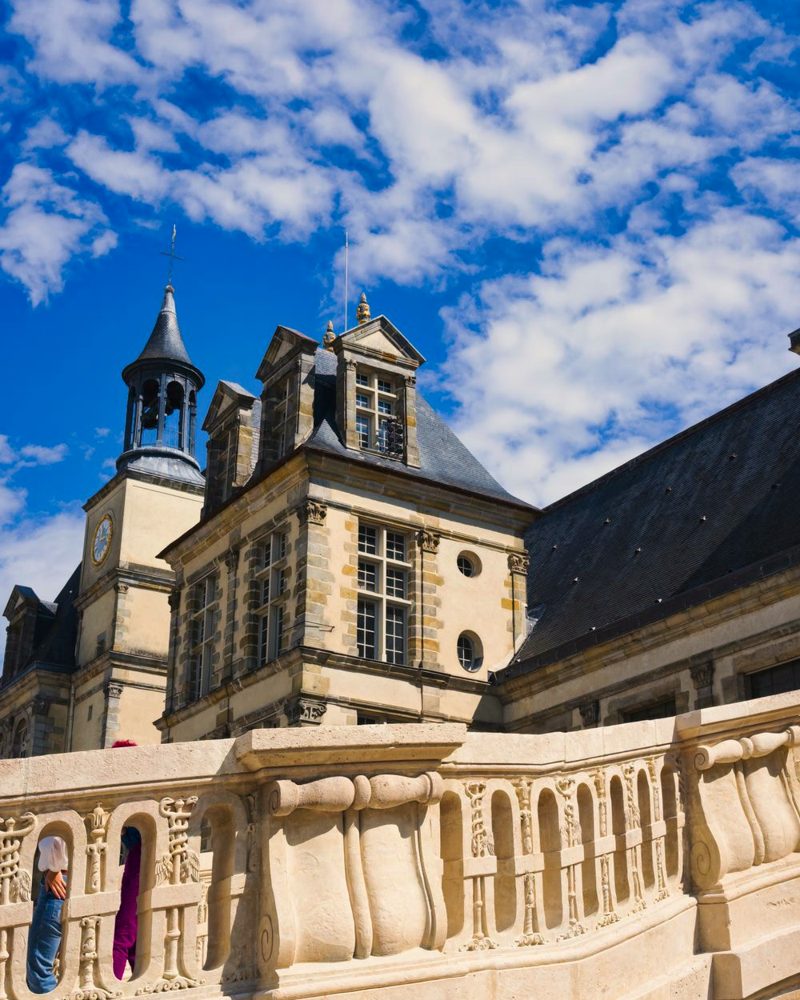
The château of the Duc d’Aumale and its Musée Condé, the Grandes Écuries and the great park and forest: a whole day of art, horses and gardens within reach of Paris.
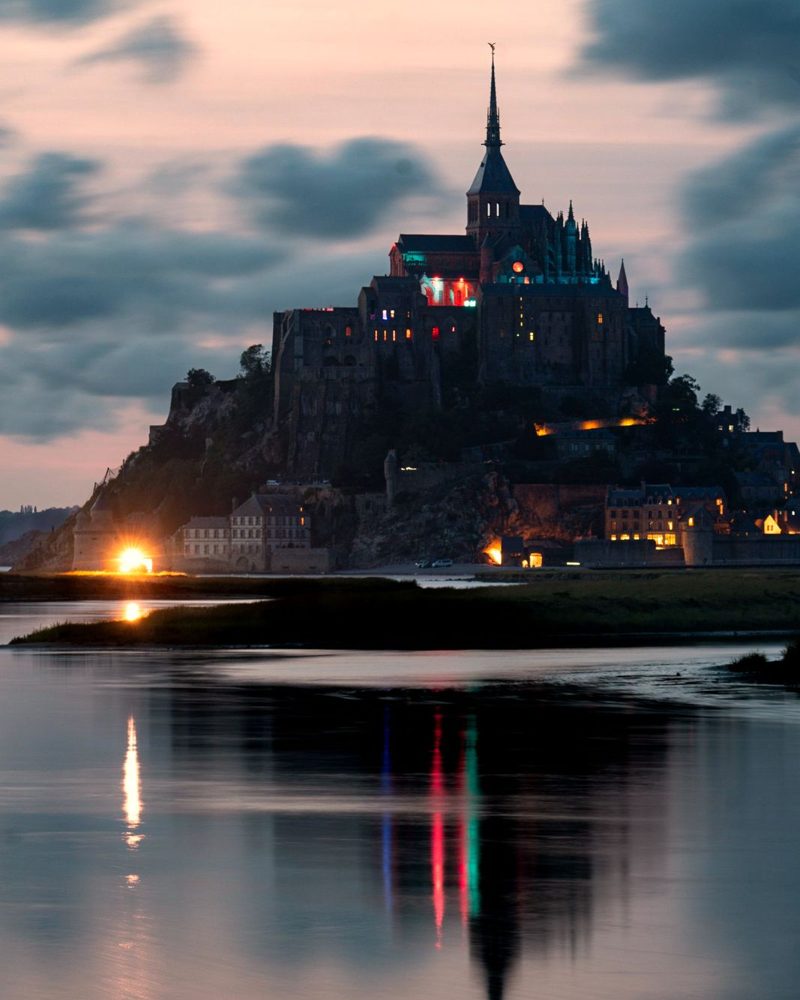
An abbey on a rock in the middle of a bay, surrounded by water at high tide and by sand at low tide. Worth a night, to see it once the crowds have gone.
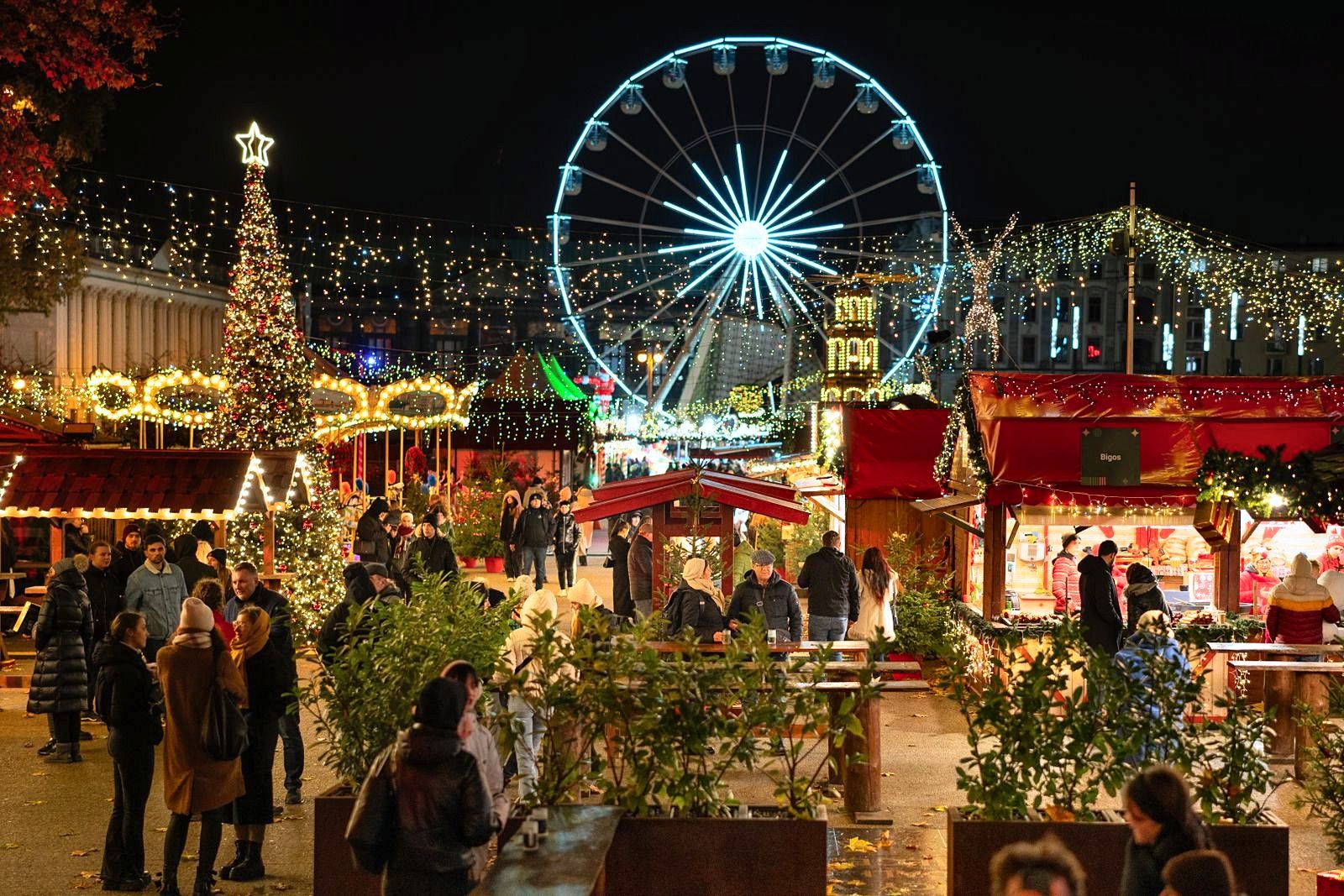
The château of Nicolas Fouquet, built by Le Vau, Le Brun and Le Nôtre, whose famous 1661 fête prefigured Versailles. In the Christmas season, the Grand Noël lights up the château with monumental projections on the façade.
A cathedral of coronations, chalk cellars beneath the city and the avenue lined with the great houses.
An editors’ selection. Tanja’s own visit and impressions to come.
Reims & Épernay · Temporary image: Pexels
Reims is where the kings of France were crowned, in the Gothic cathedral of Notre-Dame. The cathedral, the former abbey of Saint-Remi and the Palais du Tau are listed together as a UNESCO World Heritage site.
Beneath the city, the chalk pits of the Saint-Nicaise hill became the cellars of the Champagne houses; together with the avenue de Champagne in Épernay and the hillside vineyards, they were inscribed by UNESCO in 2015 as the “Champagne hillsides, houses and cellars”.
The cathedral of Reims · Temporary image: Pexels
Plan your escape
Getting there
TGV from Paris Gare de l’Est to Reims
When
All year; the harvest is in September
Don’t miss
The cathedral, a cellar visit on the Saint-Nicaise hill, the avenue de Champagne in Épernay
Art, gardens and the most beautiful stables in France, twenty-five minutes from the Gare du Nord.
An editors’ selection. Tanja’s own visit and impressions to come.
Domaine de Chantilly · Temporary image: Pexels
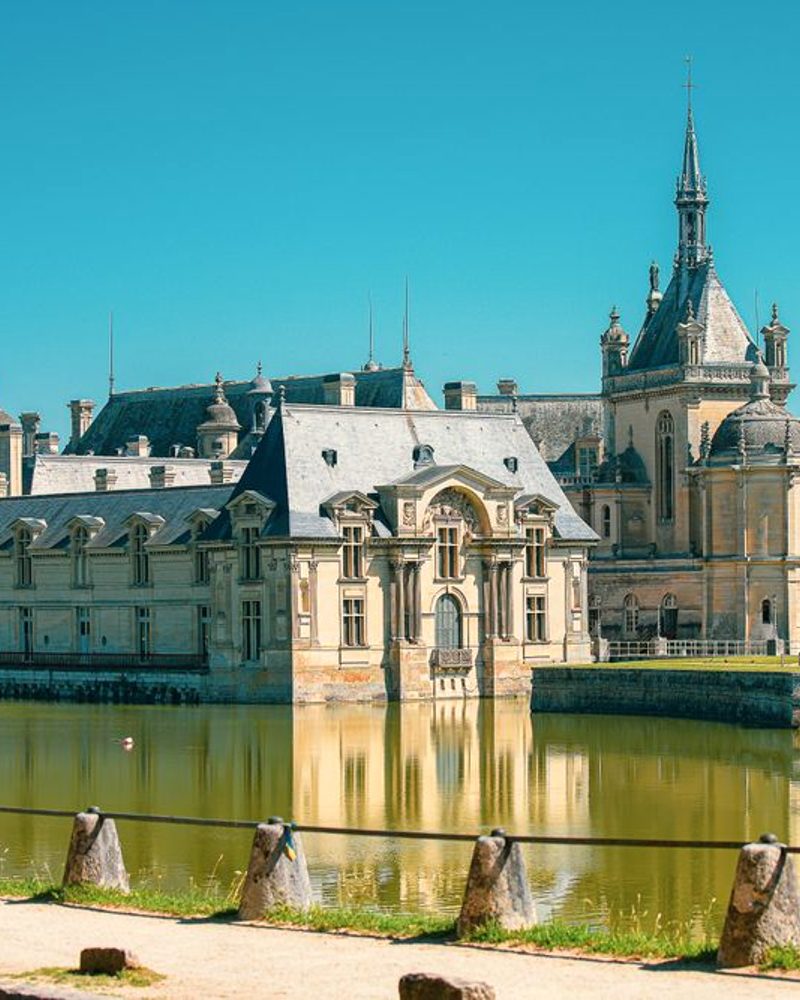
The Domaine de Chantilly rises from its lake north of Paris. The château was rebuilt in the nineteenth century by Henri d’Orléans, Duc d’Aumale, son of King Louis-Philippe, who left the estate and its collections to the Institut de France.
His Musée Condé holds one of the finest collections of old master paintings in France. Across the lawns, the Grandes Écuries, built in the eighteenth century for the Princes of Condé, house the Musée du Cheval, and the gardens carry the signature of André Le Nôtre.
The château on its lake · Temporary image: Pexels
Plan your escape
Getting there
TER from Gare du Nord to Chantilly-Gouvieux in about 25 minutes (RER D about 45), then a 20–25 minute walk through the town or the forest
When
All year
Don’t miss
The Musée Condé, the Grandes Écuries, the Le Nôtre gardens
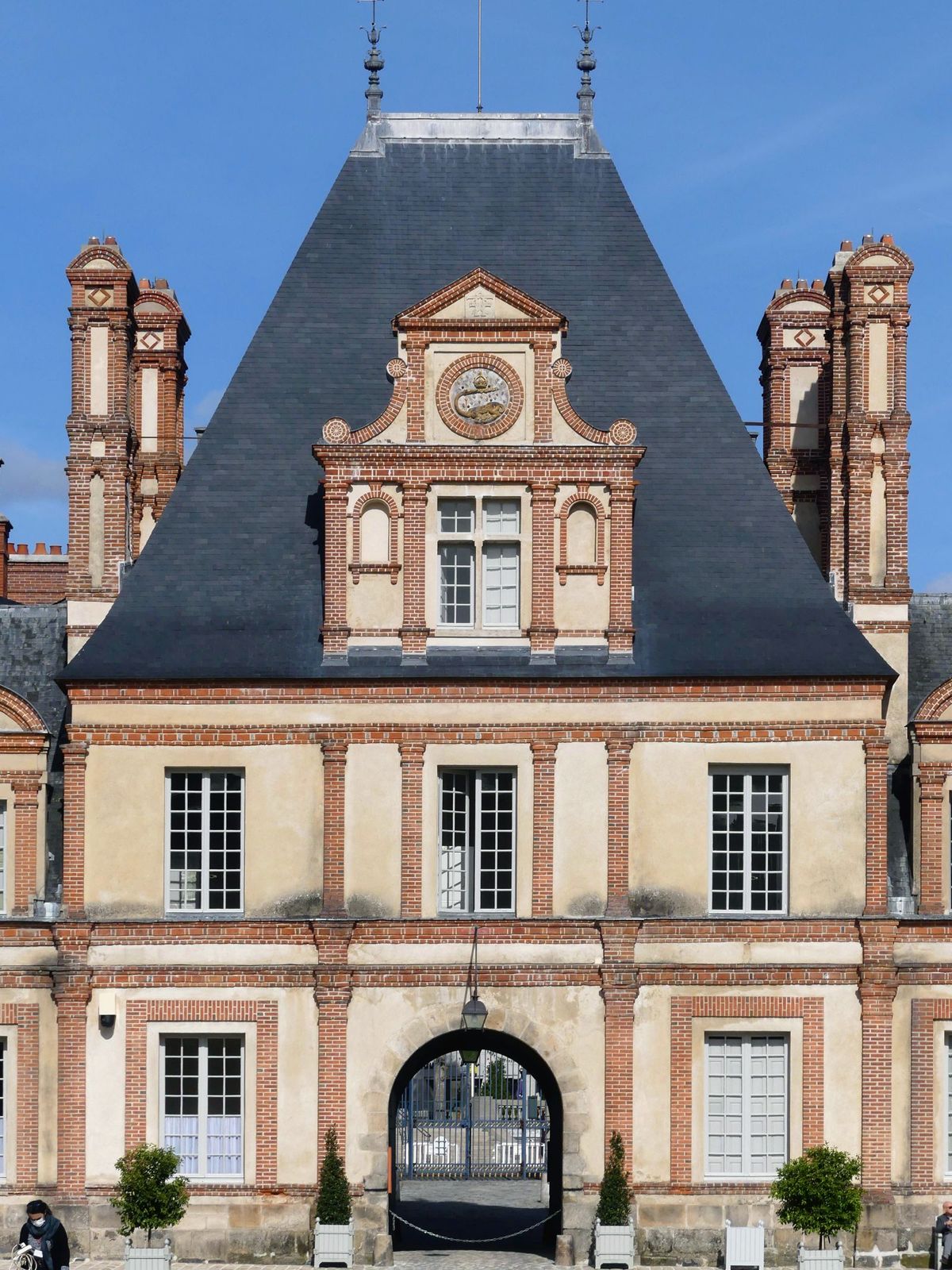
The palace of the French sovereigns, at the edge of one of the most beautiful forests in France.
An editors’ selection. Tanja’s own visit and impressions to come.
Château de Fontainebleau · Temporary image: Pexels
For eight centuries, from the medieval kings to Napoleon III, the sovereigns of France lived at Fontainebleau. François I brought Italian Renaissance artists here, and his gallery remains one of the jewels of the palace.
In the courtyard with its horseshoe staircase, Napoleon bade farewell to his Old Guard in 1814. The palace and its park are a UNESCO World Heritage site, and the forest around them is a world of walks, rocks and silence.
The palace façade · Temporary image: Pexels
Plan your escape
Getting there
Train from Gare de Lyon to Fontainebleau-Avon, then a short bus ride
When
All year
Don’t miss
The François I gallery, the horseshoe staircase, a walk in the forest
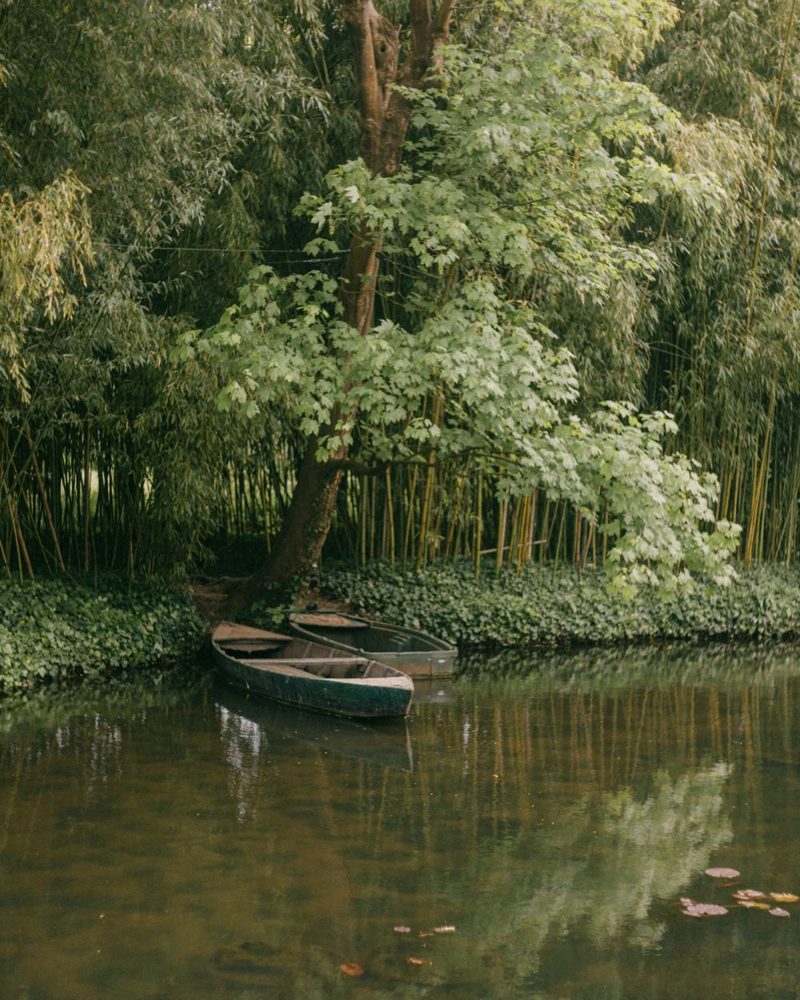
The house where Claude Monet lived and painted, the flower garden and the water lilies.
An editors’ selection. Tanja’s own visit and impressions to come.
Giverny · Temporary image: Pexels
Claude Monet settled in Giverny in 1883 and lived here until his death in 1926; 2026 marks the centenary. He designed every part of it: the flower garden in front of the pink house, and across the lane the water garden, with its water lilies and its green Japanese bridge.
In 2026 the house and gardens were open from 1 April to 1 November, every day from 10am to 6pm; they now rest for the winter. The best moment to come is late spring, when the wisteria and the first water lilies are in flower.
Plan your escape
Getting there
Train from Gare Saint-Lazare to Vernon-Giverny, then the seasonal shuttle (5 km) or a taxi
The silhouette everyone has seen, between Normandy and Brittany: worth a night, to see it once the crowds have gone.
An editors’ selection. Tanja’s own visit and impressions to come.
Mont-Saint-Michel · Temporary image: Pexels
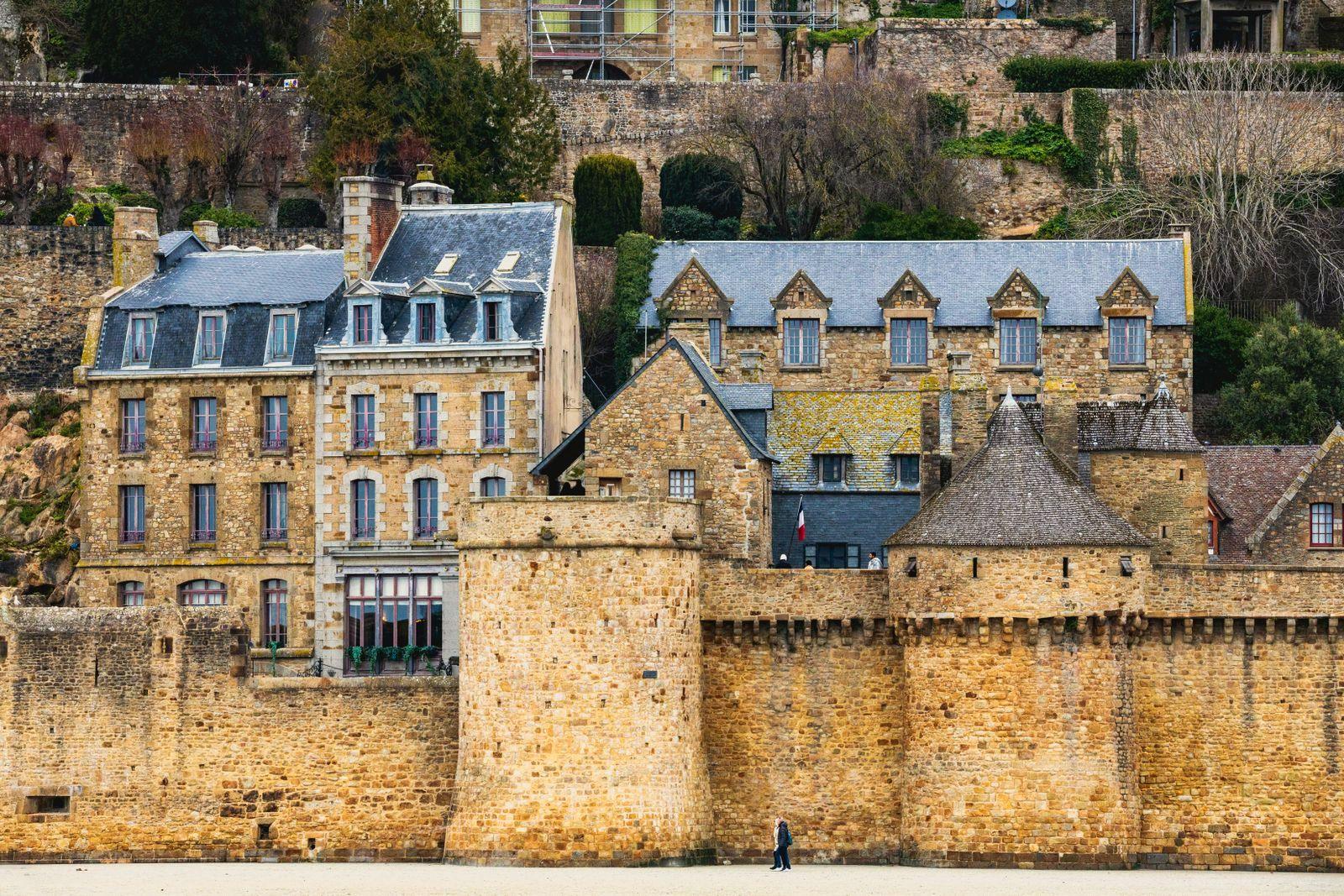
An abbey on a rock in the middle of a bay, surrounded by water at high tide and by sand at low tide: Mont-Saint-Michel and its bay are a UNESCO World Heritage site, and the tides here are among the strongest in Europe.
Come for a night. In the evening, when the day visitors leave, the abbey lights up above the bay and the village falls silent: it is the moment that makes the journey.
The village below the abbey · Temporary image: Pexels
Plan your escape
Getting there
Direct “Train du Mont-Saint-Michel” from Paris Montparnasse to Pontorson, from 3 h 53, every day from April to October and at weekends all year, then a shuttle to the Mount; or TGV to Rennes and a coach
When
All year; the great tides are spectacular
Don’t miss
The abbey, the village at night, a walk on the bay with a guide
In Lorraine, a wildlife park where you can sleep in a lodge looking out on a wolf pack.
An editors’ selection. Tanja’s own visit and impressions to come.
Parc Animalier de Sainte-Croix · Temporary image: Pexels
The Parc Animalier de Sainte-Croix lies at Rhodes, in Moselle, between Metz and Strasbourg. Its 46 lodges include a hotel overlooking coyotes and black bears, tree houses, stilt lodges facing bears and bison, and nine lodges set in the territory of the park’s five wolf packs, behind wide windows.
A stay includes two days in the park, dinner and breakfast; lodges are open from April to November, and also in winter, from December to mid-March, when the park itself is closed.
Winter at Sainte-Croix · Temporary image: Pexels
Plan your escape
Getting there
By car or train via Metz or Strasbourg
When
April to November; winter stays December to mid-March
Vaux-le-Vicomte, the château that inspired Versailles
Nicolas Fouquet’s masterpiece, and at Christmas a Grand Noël lit up from room to room.
An editors’ selection. Tanja’s own visit and impressions to come.
Château de Vaux-le-Vicomte · Temporary image: Pexels
Built for Nicolas Fouquet, Louis XIV’s Superintendent of Finances, by the architect Le Vau, the painter Le Brun and the gardener Le Nôtre, Vaux-le-Vicomte was the most dazzling house of its day. Its fête of 17 August 1661 was so splendid that, within weeks, Fouquet was arrested, and the king took the same three artists to build Versailles.
This season the 21st Grand Noël runs from 14 November 2026 to 3 January 2027: a journey around the world from room to room, decorated trees, an ice rink and, at nightfall, projections on the façade. Booking is required.
Plan your escape
Getting there
South-east of Paris, near Melun
When
Grand Noël: 14 November 2026 – 3 January 2027
Don’t miss
The great oval salon, the Le Nôtre gardens, the façade at nightfall
The doors Paris keeps half-closed: members’ clubs inside the city’s hotels, historic circles and the gastronomic societies born here.
In alphabetical order, never a ranking. Most of these clubs admit members by sponsorship or invitation: we tell their story, we do not sell access. Temporary images: Pexels.
Members’ clubs
Inside the hotels
Members’ club · 16thL’Aventure
L’Aventure club
Hôtel L’Aventure
The members’ club of the Hôtel L’Aventure, a few steps from the Étoile. Admission by application, approved by the management with one or more members as sponsors.
Five storeys in a 19th-century building in Pigalle, once home to Jean Cocteau: 36 bedrooms, a terrace with a plunge pool, a gym and a members-only restaurant. Membership by application.
Founded in 1898 by pioneers including Ernest Archdeacon, Jules Verne, André Michelin, Albert de Dion and Alberto Santos-Dumont. Its salons in the 16th also open for receptions.
The gastronomic society revived in Paris in 1950, heir to the guild of goose roasters whose history goes back to 1248. Membership by invitation; today it has bailliages in some 80 countries.
Where Paris trains, plays and takes to the sky: the clubs and studios worth joining, the great tennis and padel clubs, and a few experiences apart.
In alphabetical order, never a ranking. Each address is tried in person before it enters the selection; visits offered by a club are always indicated. Temporary images: Pexels.
Clubs & studios
A-List Clubs
Sports club · 16thLe Brach
Sports Club at Brach Paris
Passy
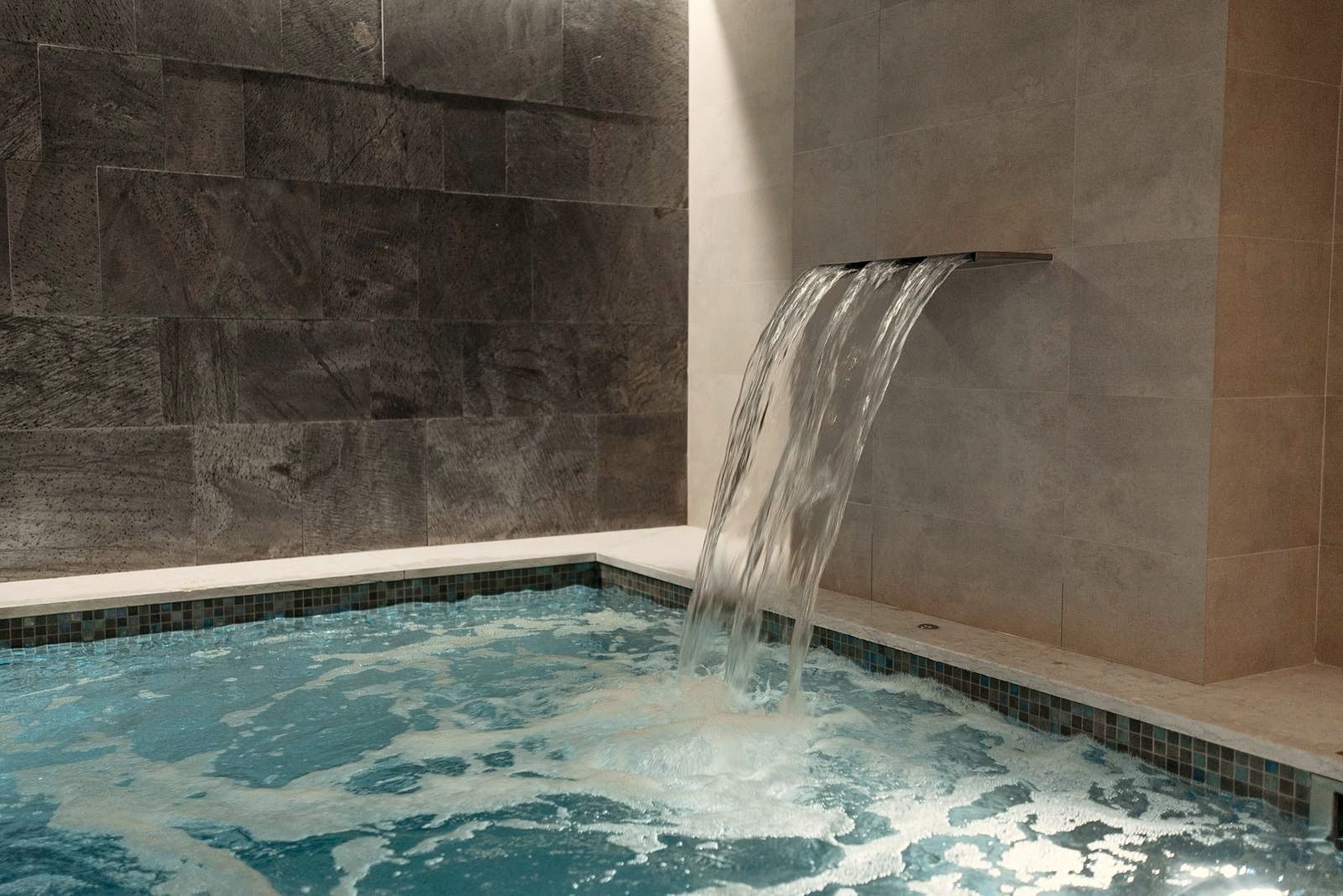
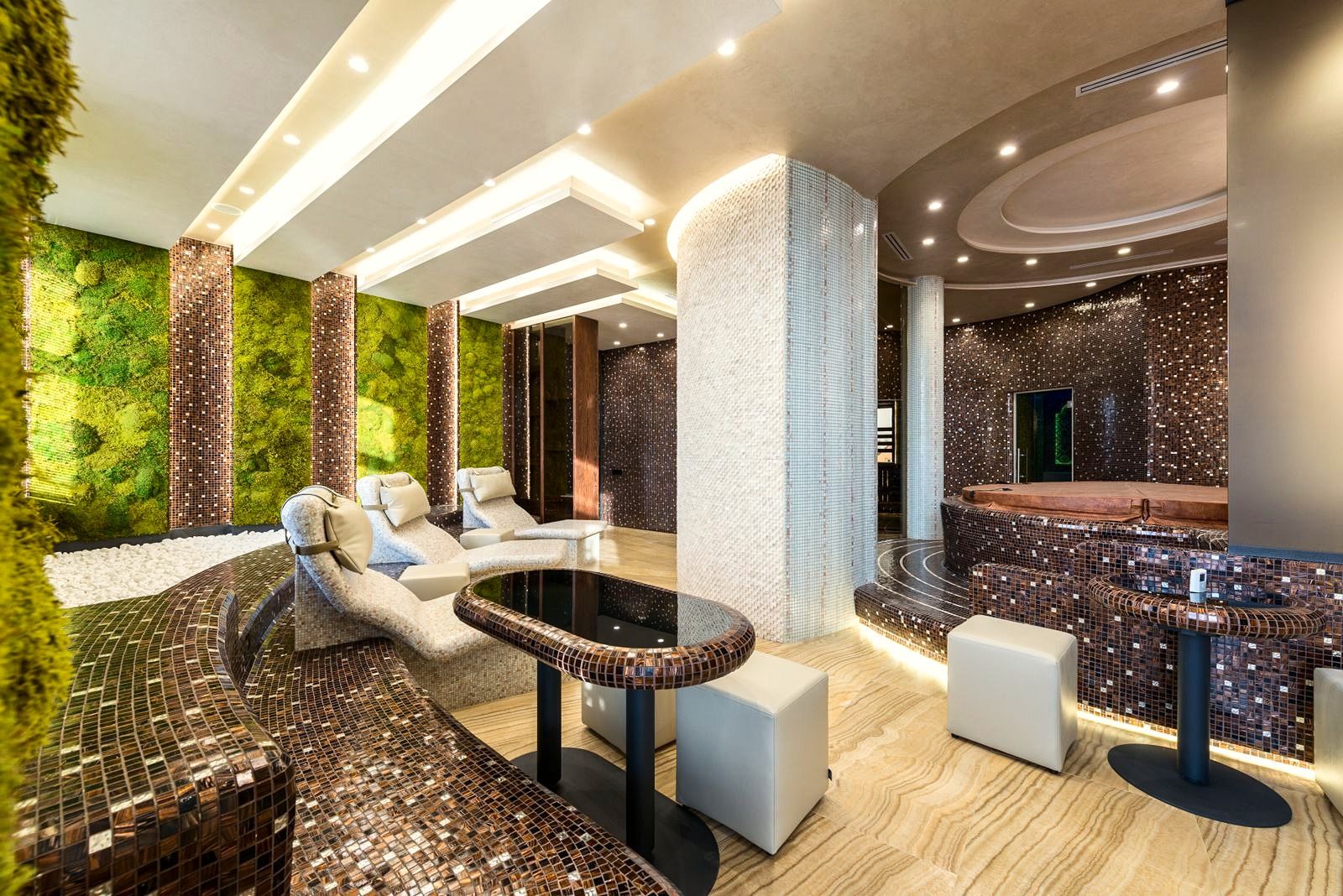
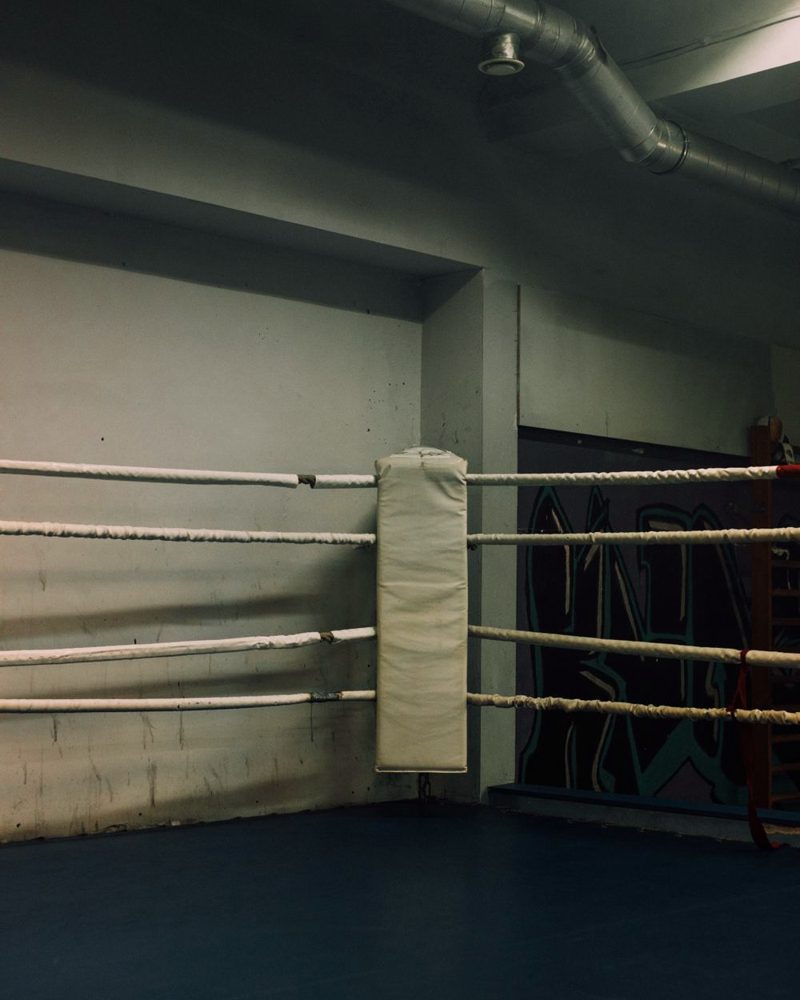
A club that recalls the boxing halls of the 1930s, with a 22-metre pool and a salt cave, at the heart of the Brach.
The reference for indoor cycling in Paris. The Lafayette studio, the former Let’s Ride set in an old printing works, was the city’s first boutique cycling studio.
The first studio in Paris to offer the full apparatus of the original method, Reformer, Tower, Chair and Barrel, in small groups, in the tradition of Real Pilates New York.
An indoor pool and 370 m² designed like a salon, inside La Maison Champs-Élysées: a new idea of the private club. Open daily, 7am–10pm; no group classes on Sundays.
From the dining room of Le Meurice to a neighbourhood table on rue Lamartine.
By Tanja Audemars
Selected on merit and in collaboration: I was a guest of Les Saisons, and lunch for two was offered in exchange for content. My judgement, as always, is my own.
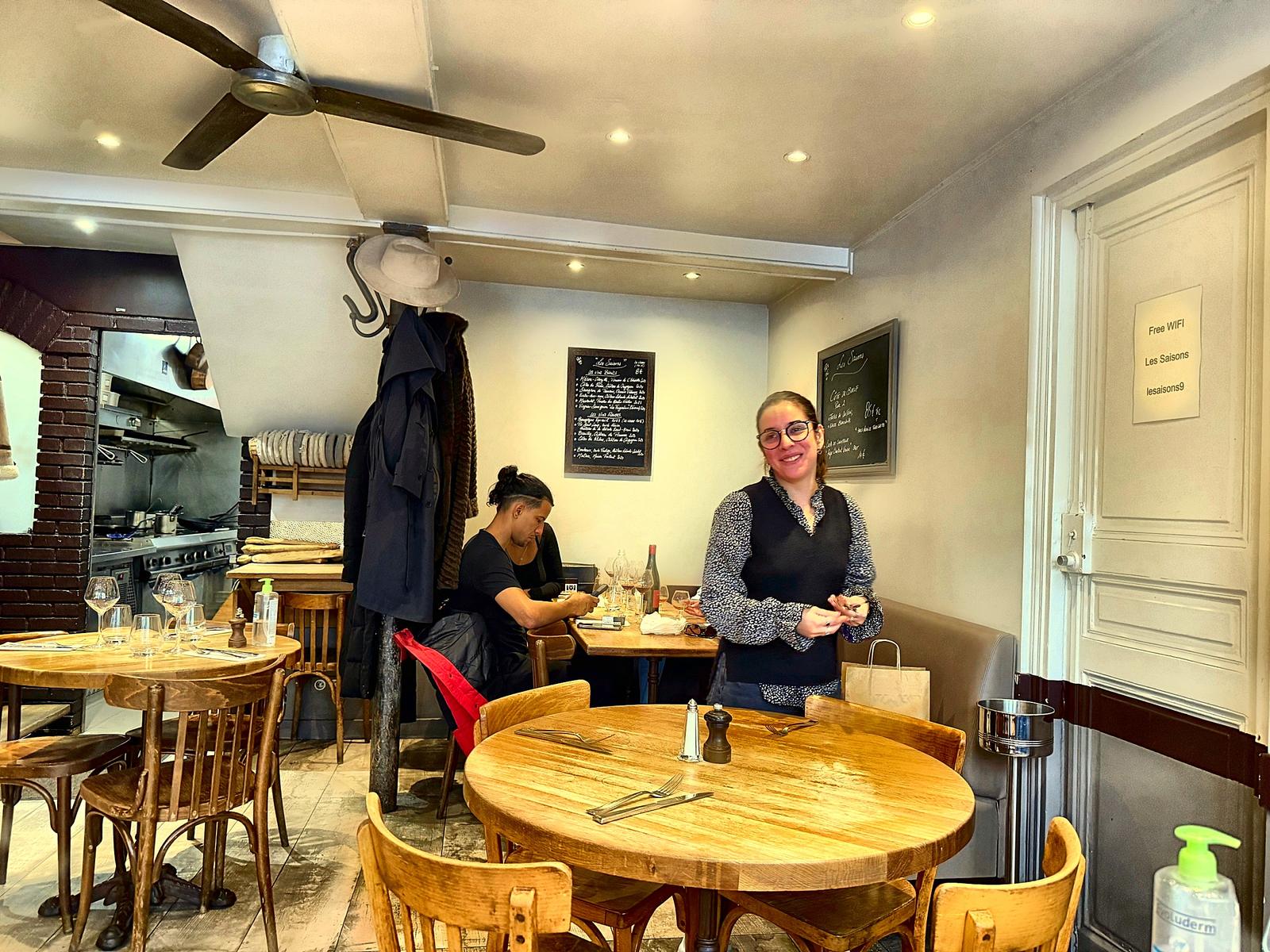
The dining room, rue Lamartine
Rue Lamartine is quiet in the way only a residential Paris street can be, a few steps from rue des Martyrs and the slopes that climb towards Montmartre. At number 52, Les Saisons does not announce itself. The menu of the day is written in chalk, and on this Tuesday it read Les Saisons, mardi 3 novembre.
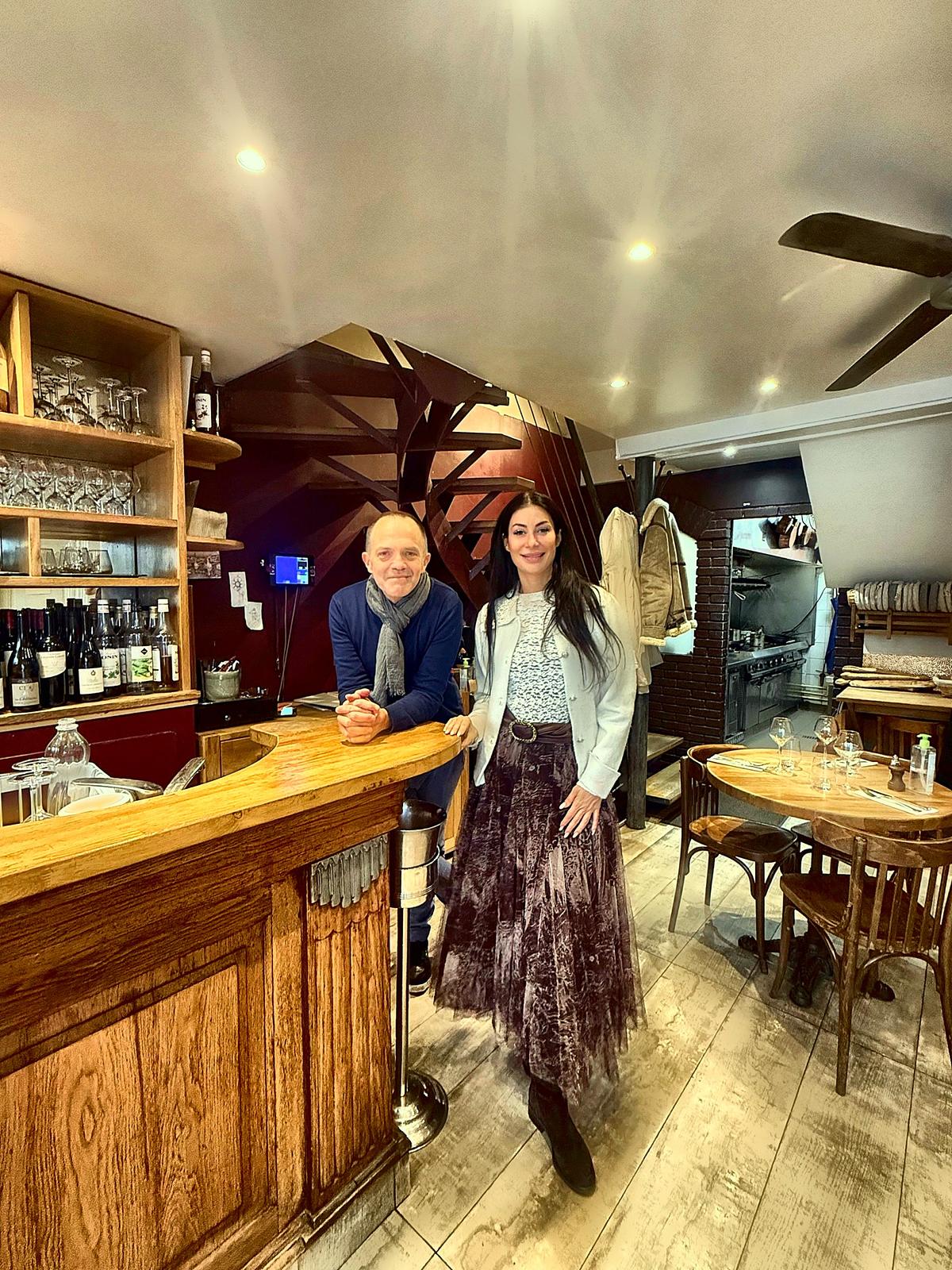
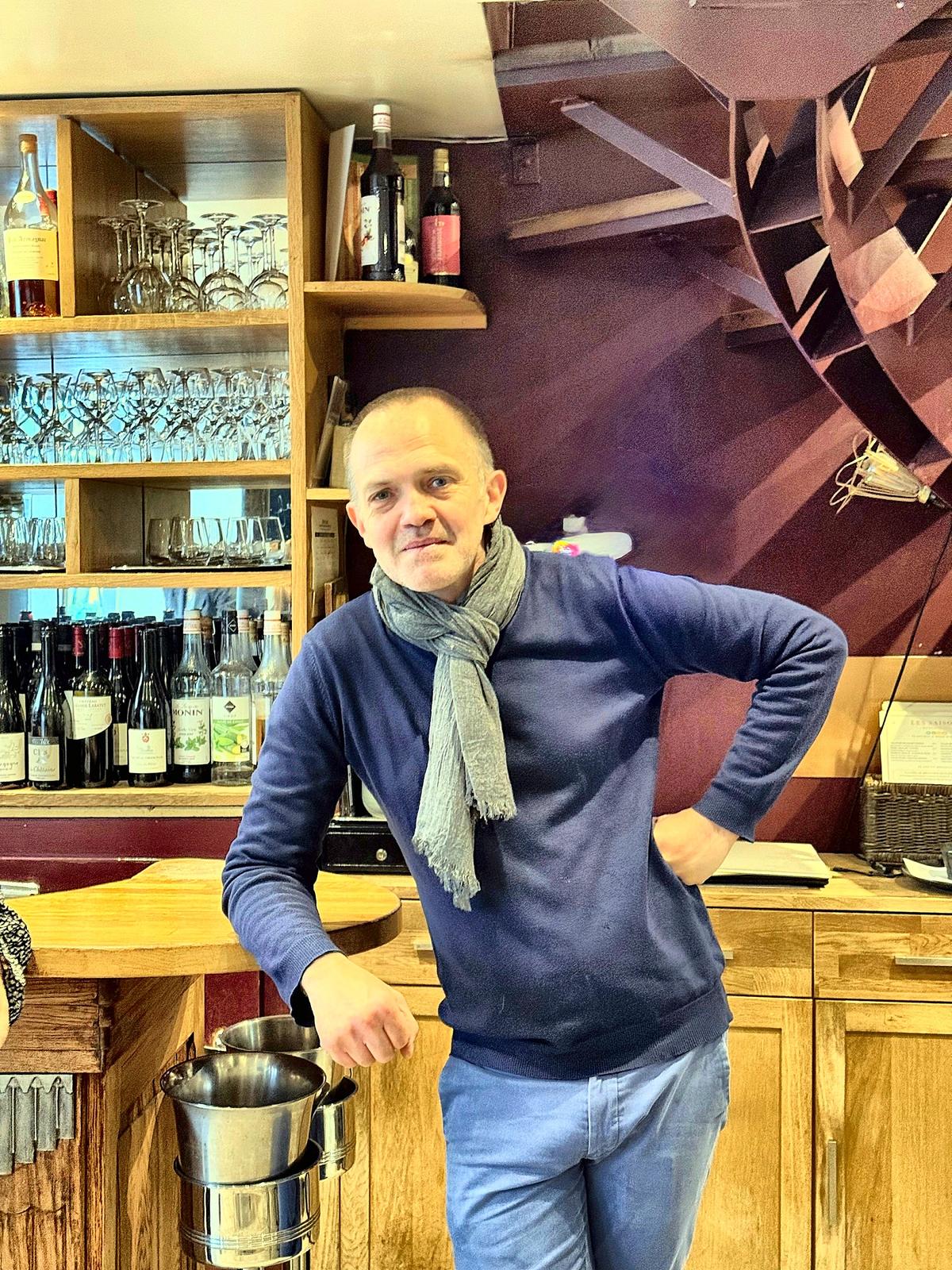
The man who runs the room is Patrice Le Nouvel. Before this bistrot he directed the dining room of Le Meurice, after years abroad, in New York and in Asia. In November 2017 he and his partner, Philippe Fréjat, took over Les Saisons.
Patrice Le Nouvel at the bar
A kitchen with carte blanche
In the kitchen is Jennifer, a French-Portuguese cheffe who has carte blanche and cooks by the season. The menu changes every day, so regulars always find something new. Patrice describes the cooking as French and reinvented, lighter, without heavy sauces: vegetarian dishes, and meat and fish from the Rungis market.
The chalkboard, Tuesday 3 November
Velouté de courgettes et chèvre frais
Tarte à l’oignon rouge, anchois et ricotta citronnée
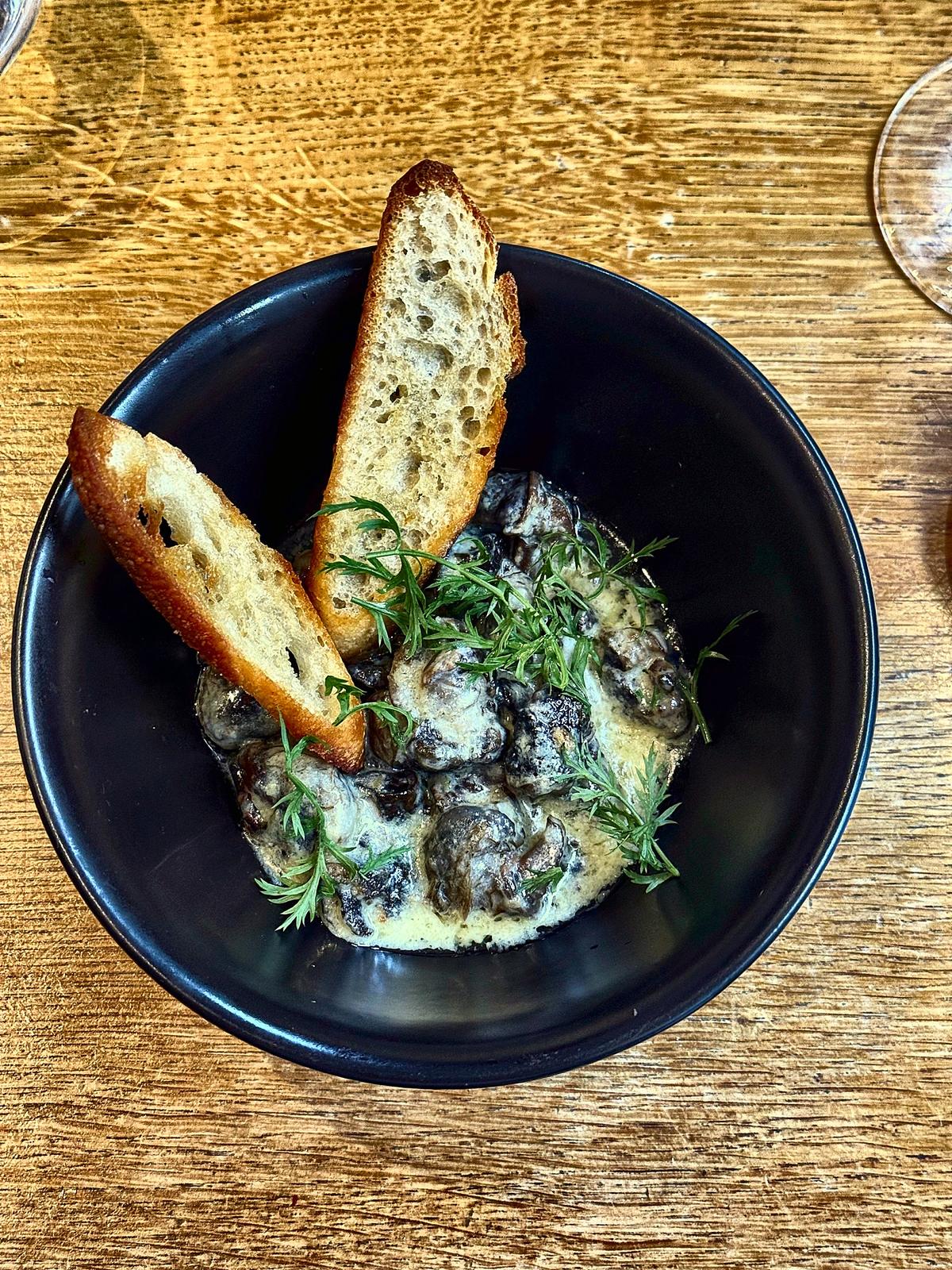
Escargots à la crème d’ail et ciboulette
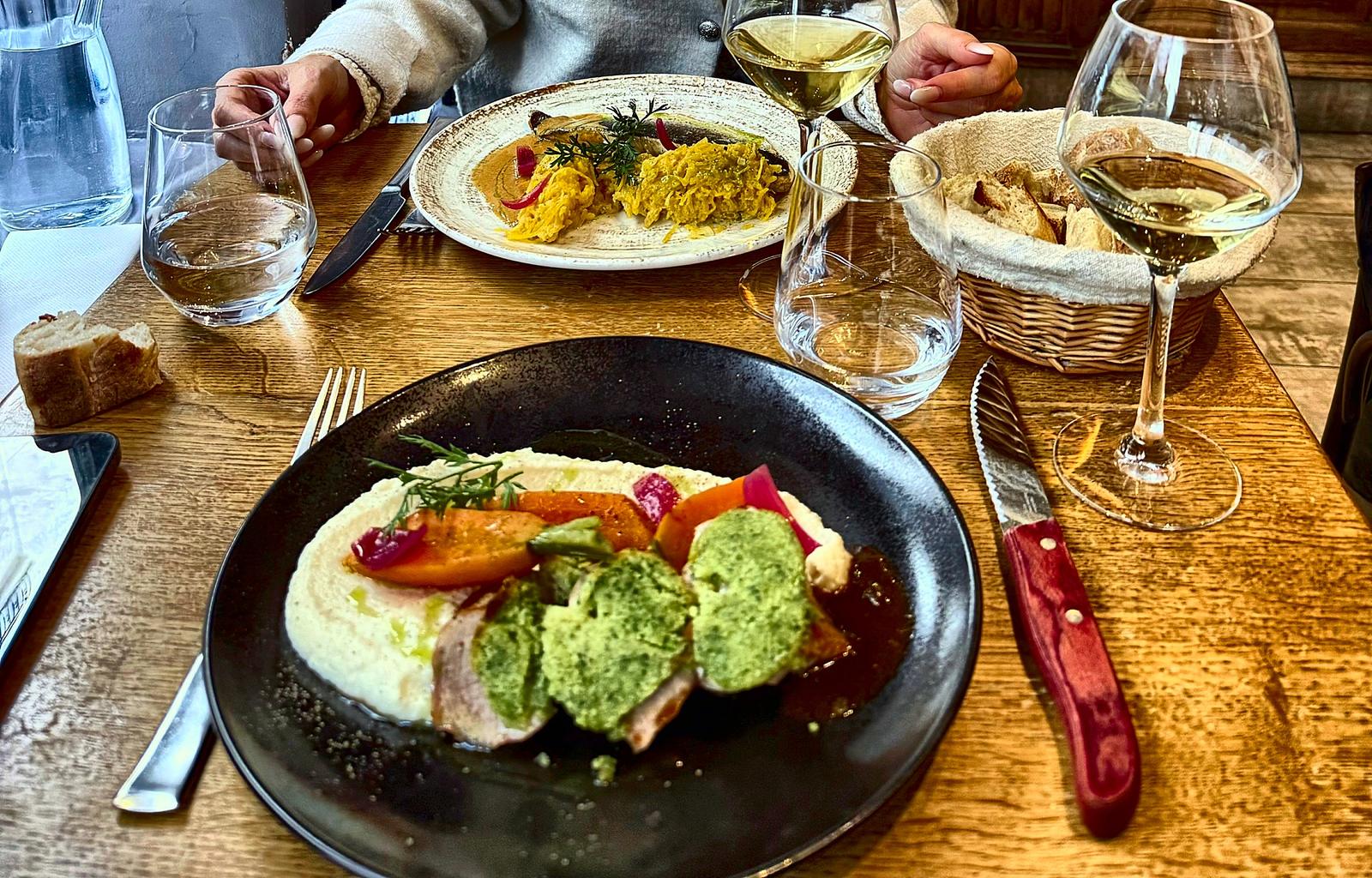
Filet mignon de porc en croûte d’herbes, purée de céleri-rave et carottes fanes
Filet de bar, bisque crémeuse de crevettes, courge spaghetti à la muscade
Risotto d’automne, jus de champignons
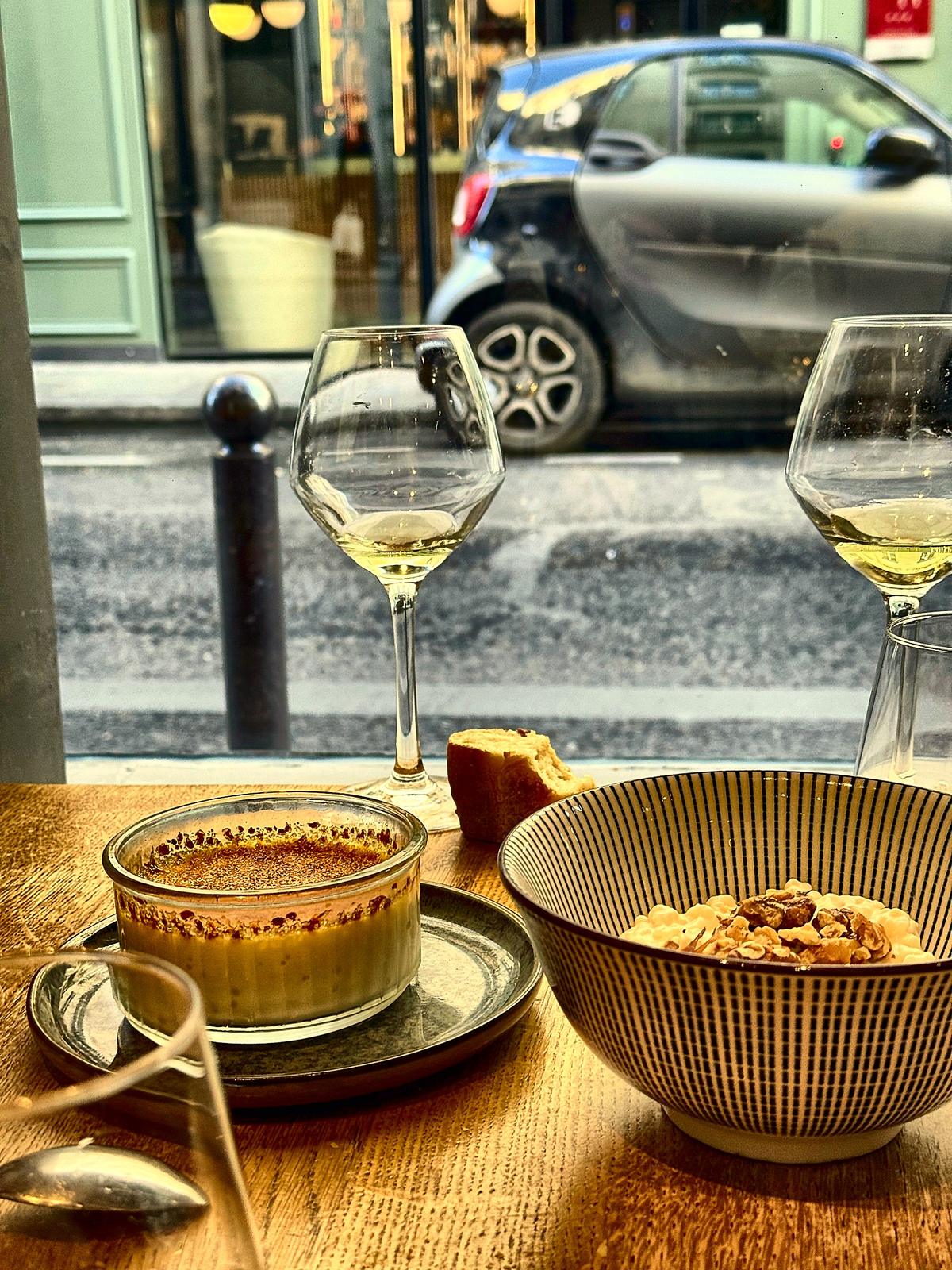
Fromage · Riz au lait · Crème brûlée vanille
The escargots were spectacular, as the photograph already suggests, and so was the red onion tart. To finish, the crème brûlée was truly excellent.
The main course · Crème brûlée by the window
Escargots à la crème d’ail et ciboulette
The people in the room
For Patrice, a true Parisian bistrot is not built on the personality in the kitchen. It is built by the people in the room, who know their guests, make them feel at home and create the atmosphere: a craft handed down from one generation to the next.
The wines are worth a conversation of their own: an unusual, personal list. My advice is to let Patrice choose for you. There are some very pleasant surprises in that cellar.
At the table · With Patrice Le Nouvel
The address
Name
Les Saisons
Address
52 rue Lamartine, 75009 Paris
Neighbourhood
9th arrondissement, near Notre-Dame-de-Lorette and rue des Martyrs
Phone
+33 1 48 78 15 18
Web
restaurant-les-saisons.com
Menu
Daily chalkboard, seasonal French cooking
Hours
Lunch Monday to Friday, 12–2.15pm · Dinner every day, 7–10.15pm
On a quiet street between Pigalle and Saint-Georges, the youngest address of Maison Boutary serves its famous caviar with an open kitchen, an Italian chef and a pastry chef who refuses to repeat herself.
By Tanja Audemars
Selected on merit and in collaboration: I was a guest of Le Comptoir Boutary, and lunch for two was offered. My judgement, as always, is my own.
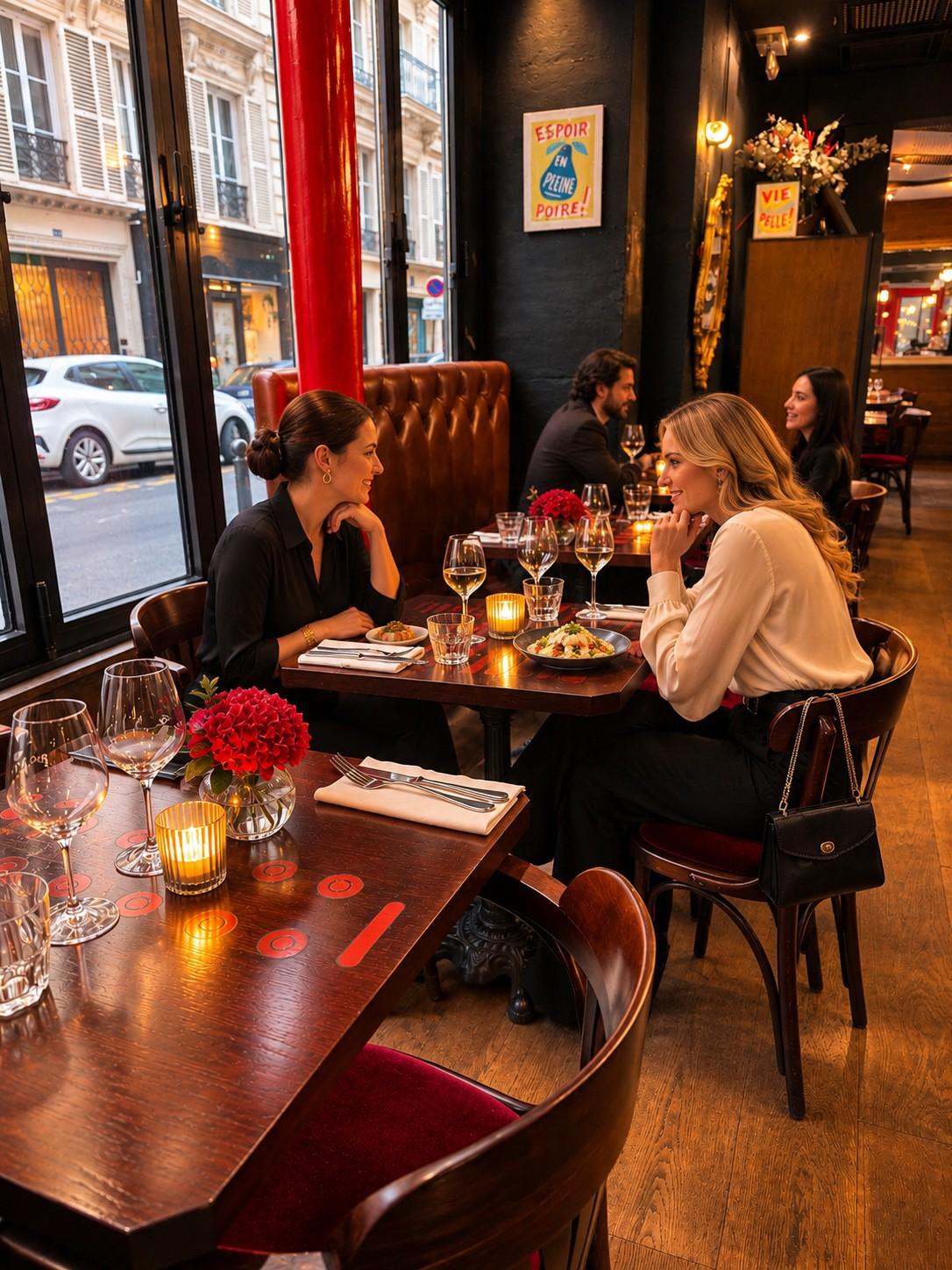
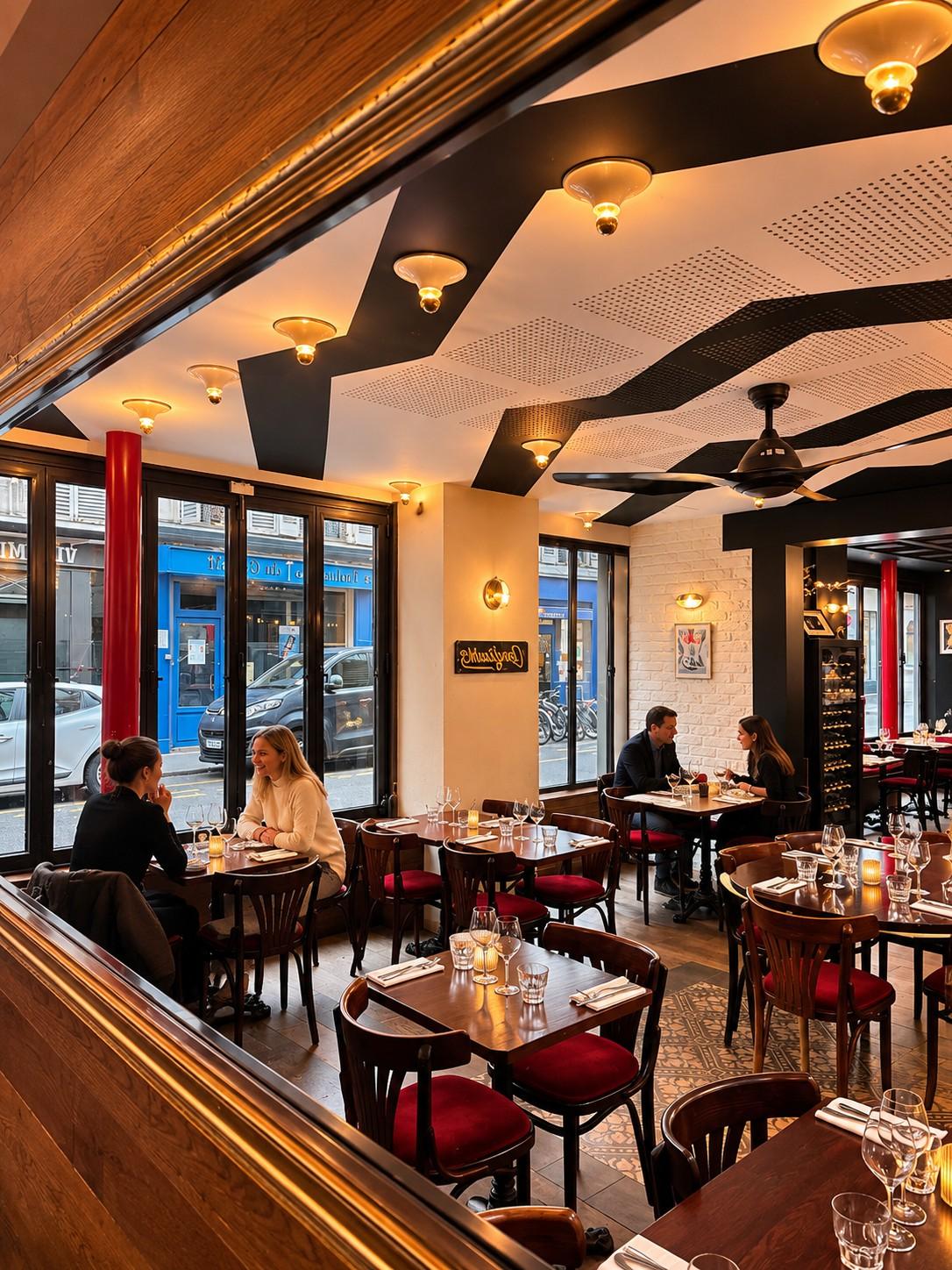
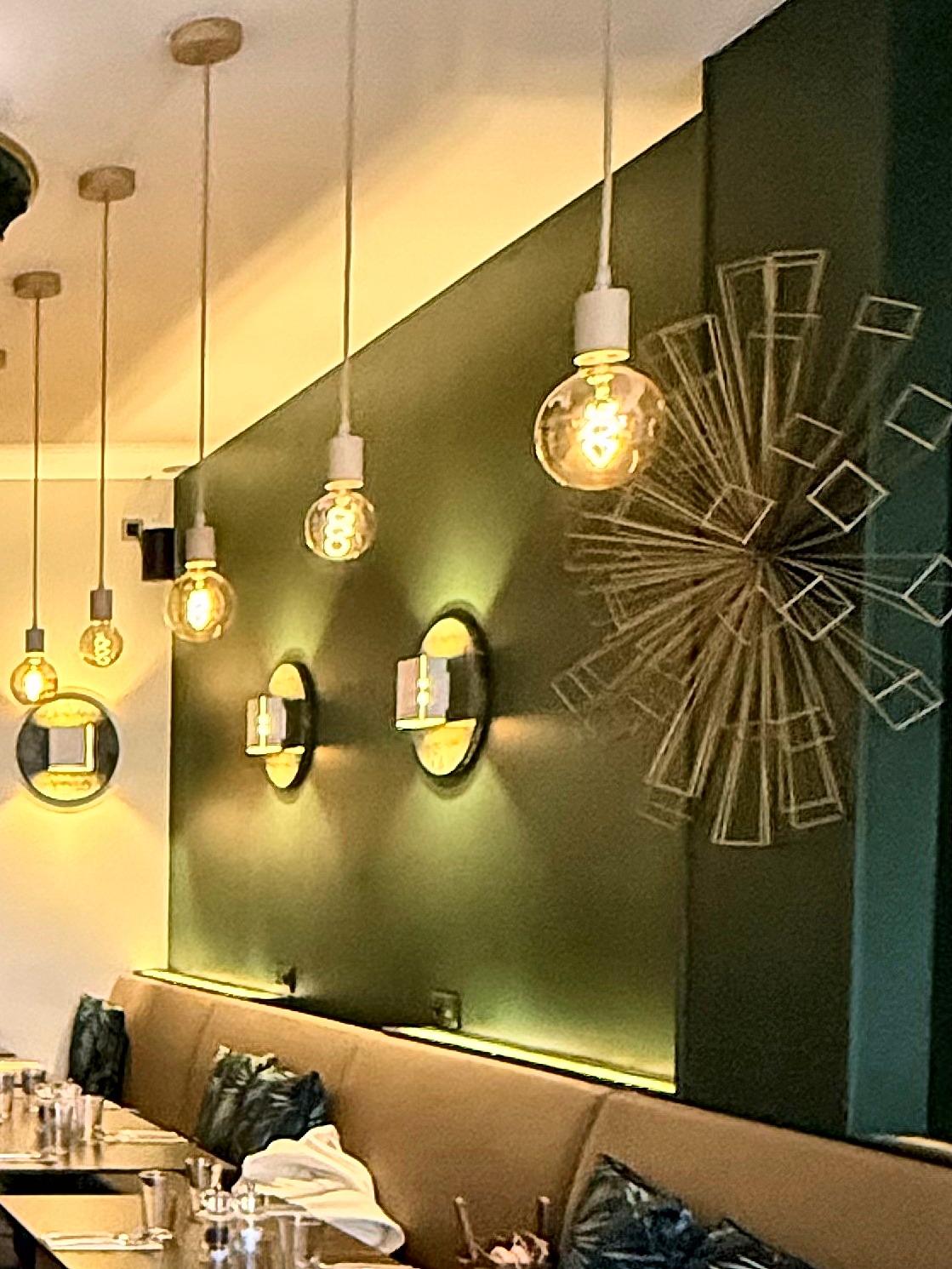
The dining room, rue Catherine-de-la-Rochefoucauld
There is a moment, at Le Comptoir Boutary, when the kitchen and the dining room stop being two different places. The kitchen is open, so the chef is never far: you watch her taste, plate and send each course across the counter, and then she comes over to ask how it was. That is how I met Claudia Gibello, on a Wednesday at half past twelve, before the first plate had even arrived.
A house of caviar, a bistro at heart
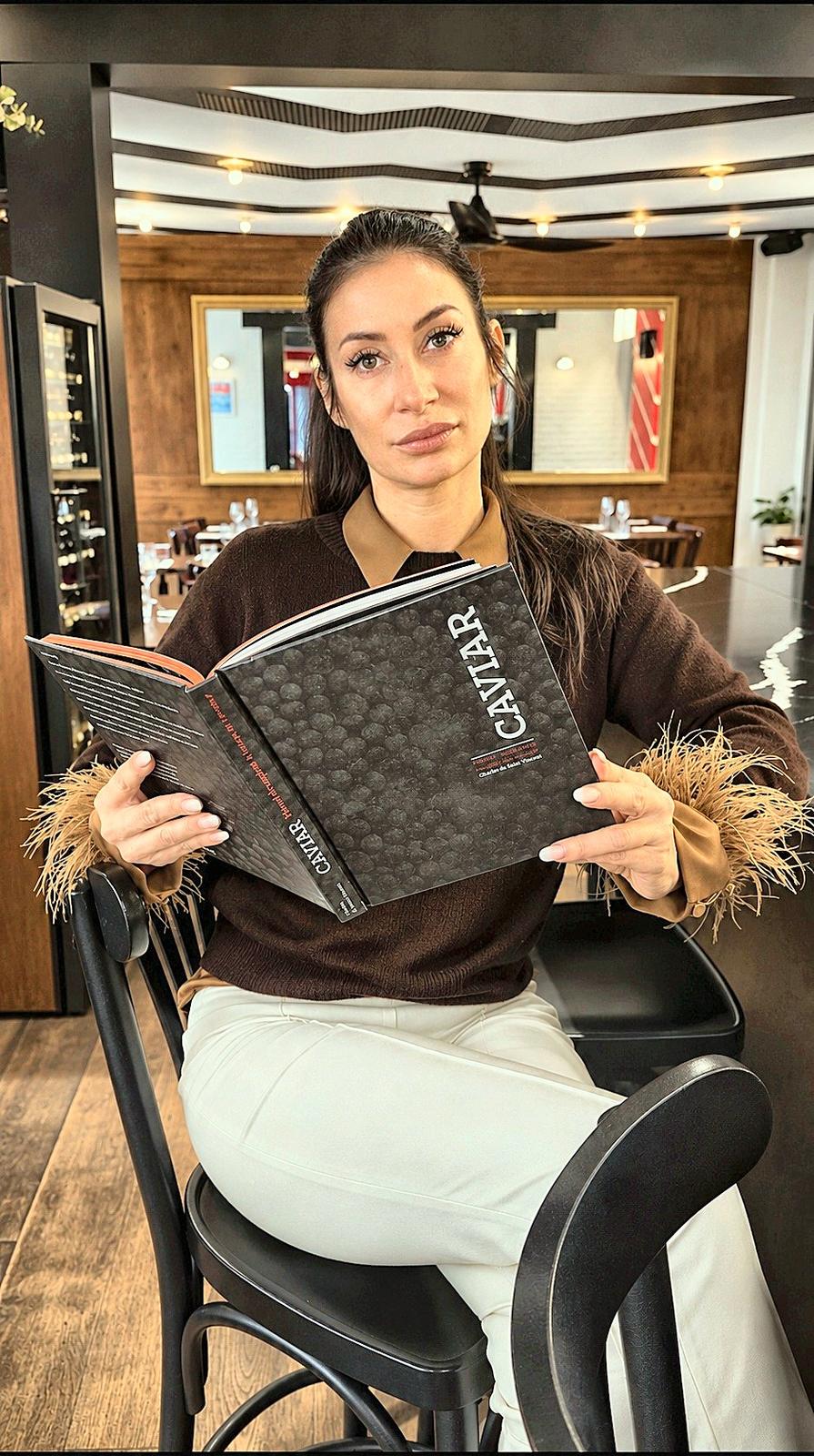
Le Comptoir Boutary is the third Parisian address of Maison Boutary, the family house founded in 1888 by Baroness Marie-Élisabeth de Saint Vincent and today led by Charles de Saint Vincent, who produces the house caviar in Bulgaria. After Boutary, the elegant caviar restaurant on rue Mazarine (2016), and Le Petit Boutary in the 17th (2018), the Comptoir opened in 2022 as the most relaxed member of the family: a neo-bistro, chic but never stiff, whose card sums it up in a single line: cuisine ouverte et vins de caractère.
Each address has its own chef and its own voice. Christophe cooks at Boutary on rue Mazarine, Romeo at Le Petit Boutary, and here, at the Comptoir, the kitchen belongs to Claudia.
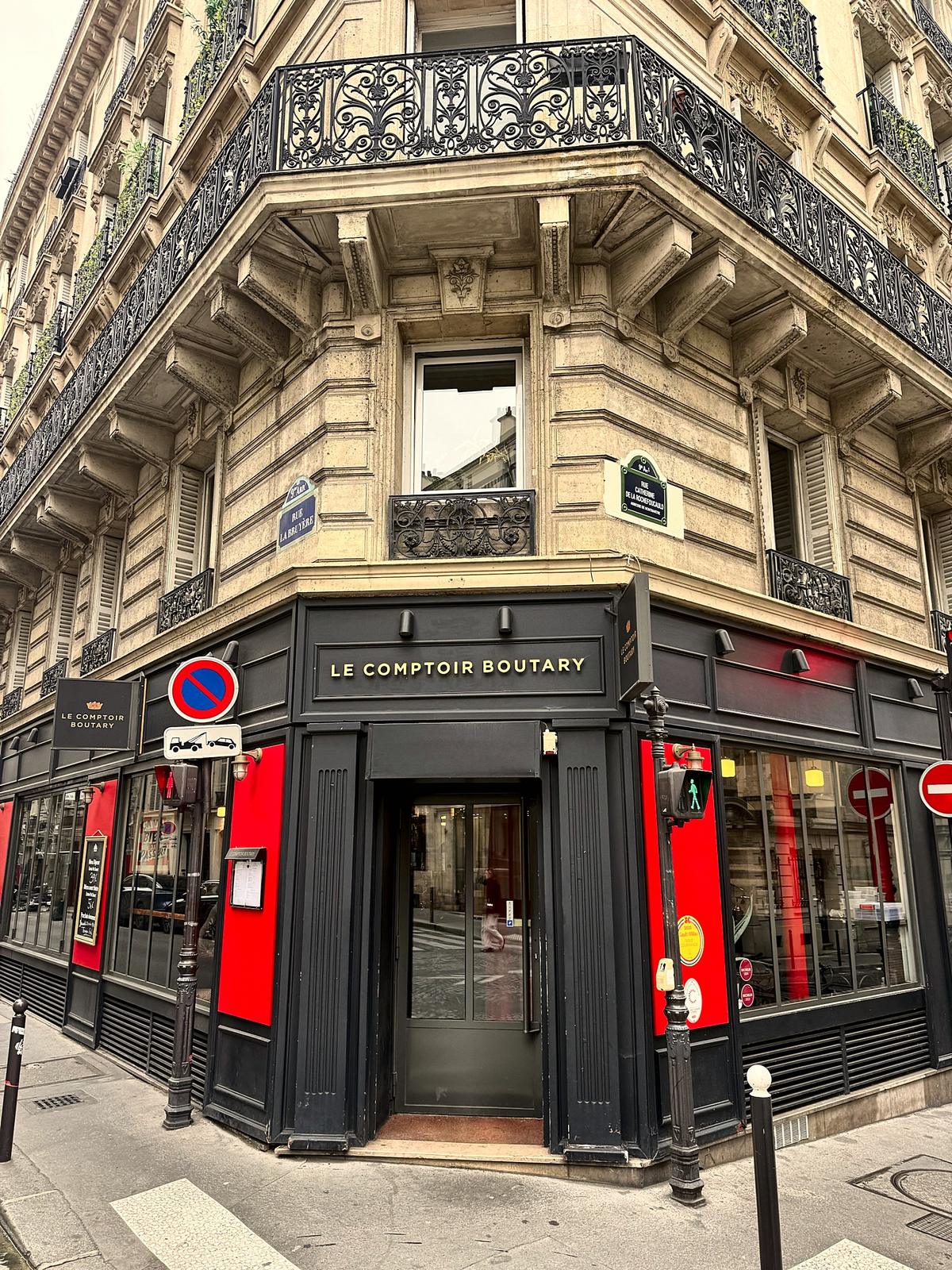
The corner on rue Catherine-de-la-Rochefoucauld · The dining room
An Italian chef in a French kitchen
Claudia’s story begins in Italy, at hotel school, and runs through some of the most beautiful dining rooms I know: seasons on Lake Como, a period at La Réserve Eden au Lac in Zurich, the opening of a five-star hotel with a spa on Lake Garda, and then Paris, where she followed her partner’s wish to work abroad. She arrived at the Comptoir as chef de partie; four months later, when the chef left, Charles asked her to take over the kitchen.
Her cuisine stays French at its foundation, then quietly crosses the Alps: a risotto, a pasta dish, an Italian idea worked into a French plate. She has carte blanche, and it shows.
The base is always French, but never a classic dish exactly as it is.Claudia Gibello, cheffe
The potato, the quail
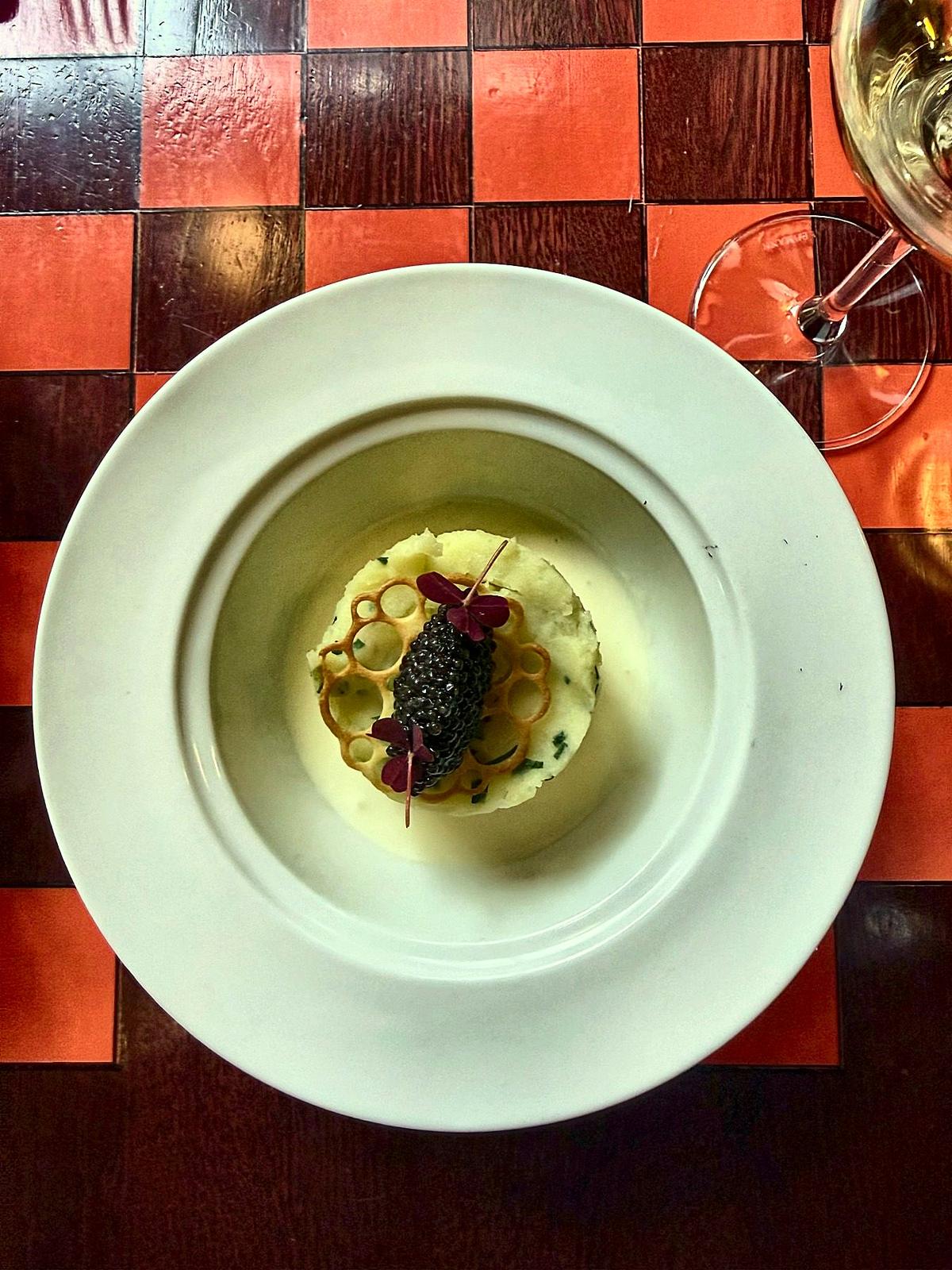
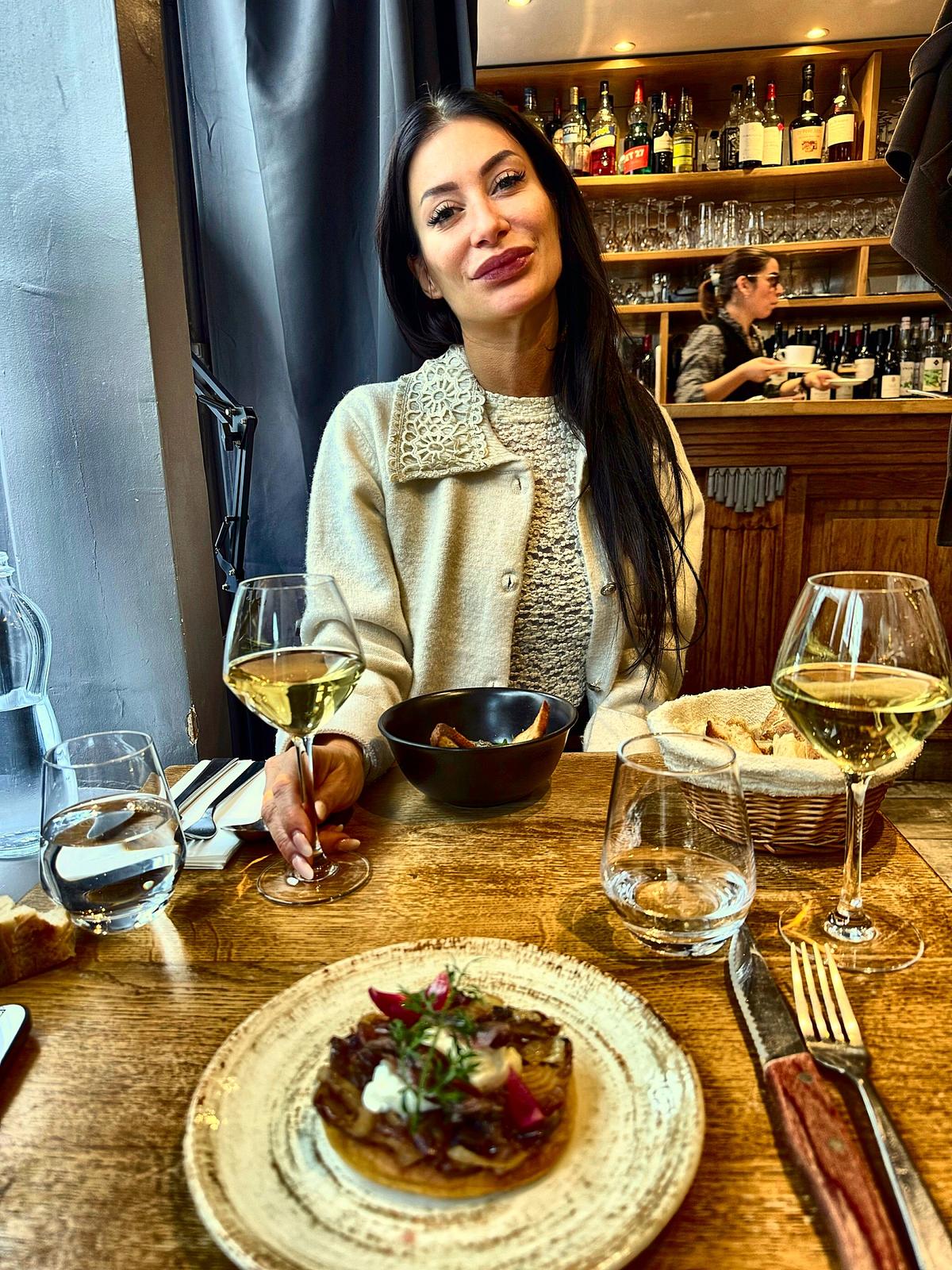
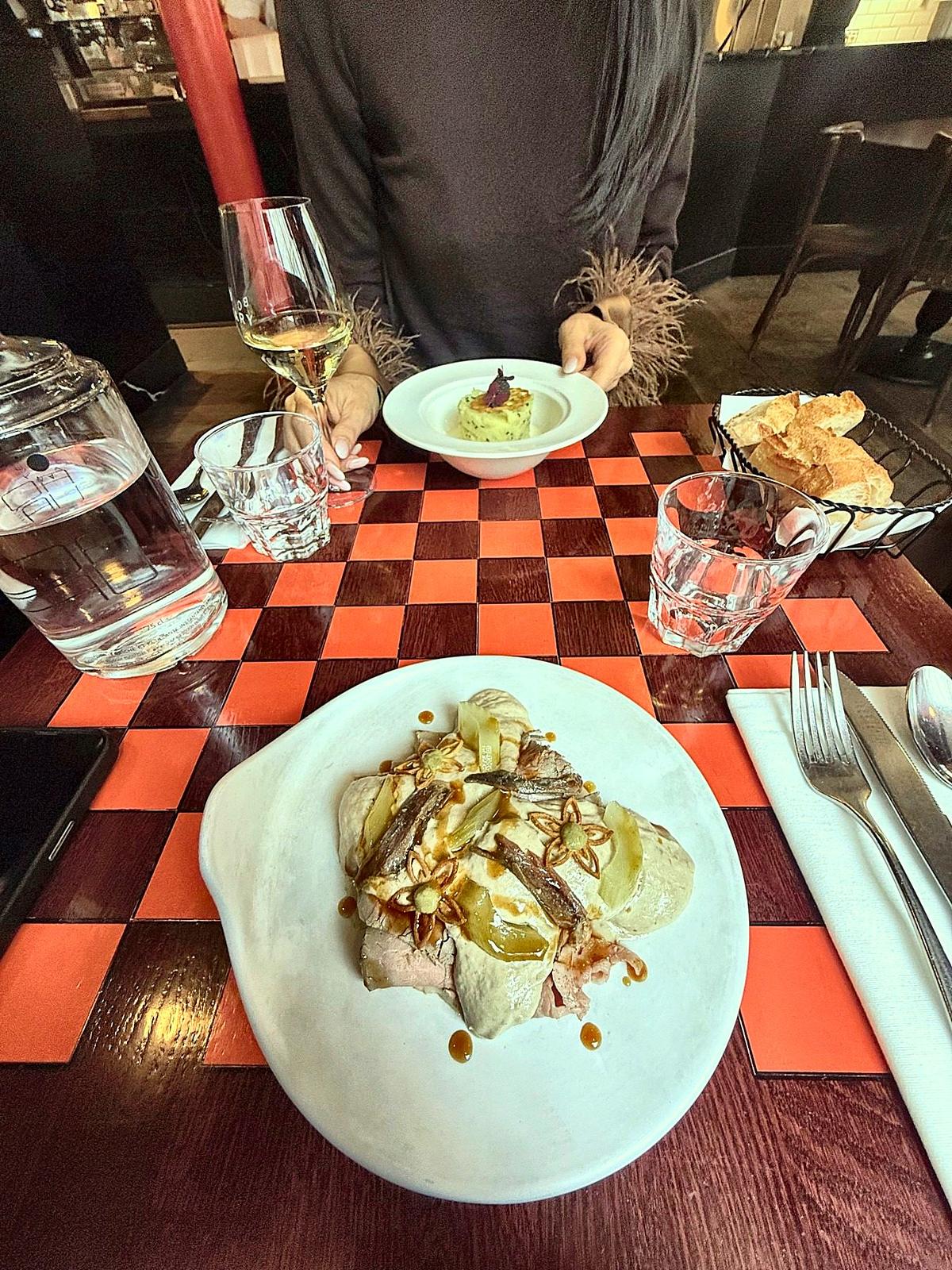
Lunch was the “Porte des Artistes” menu, with wines chosen to our taste. It opened with the dish everyone comes back for, the house signature served at every Boutary table: a potato smoked over beechwood, with Bordier seaweed butter, crème crue from Isigny and Maison Boutary caviar. You mix everything together with the spoon, and the smoke, the salt of the caviar and the cold cream meet in one mouthful. It is the most luxurious thing you can do to a potato, and it is unforgettable.
Smoked potato, seaweed butter, crème crue and Maison Boutary caviar
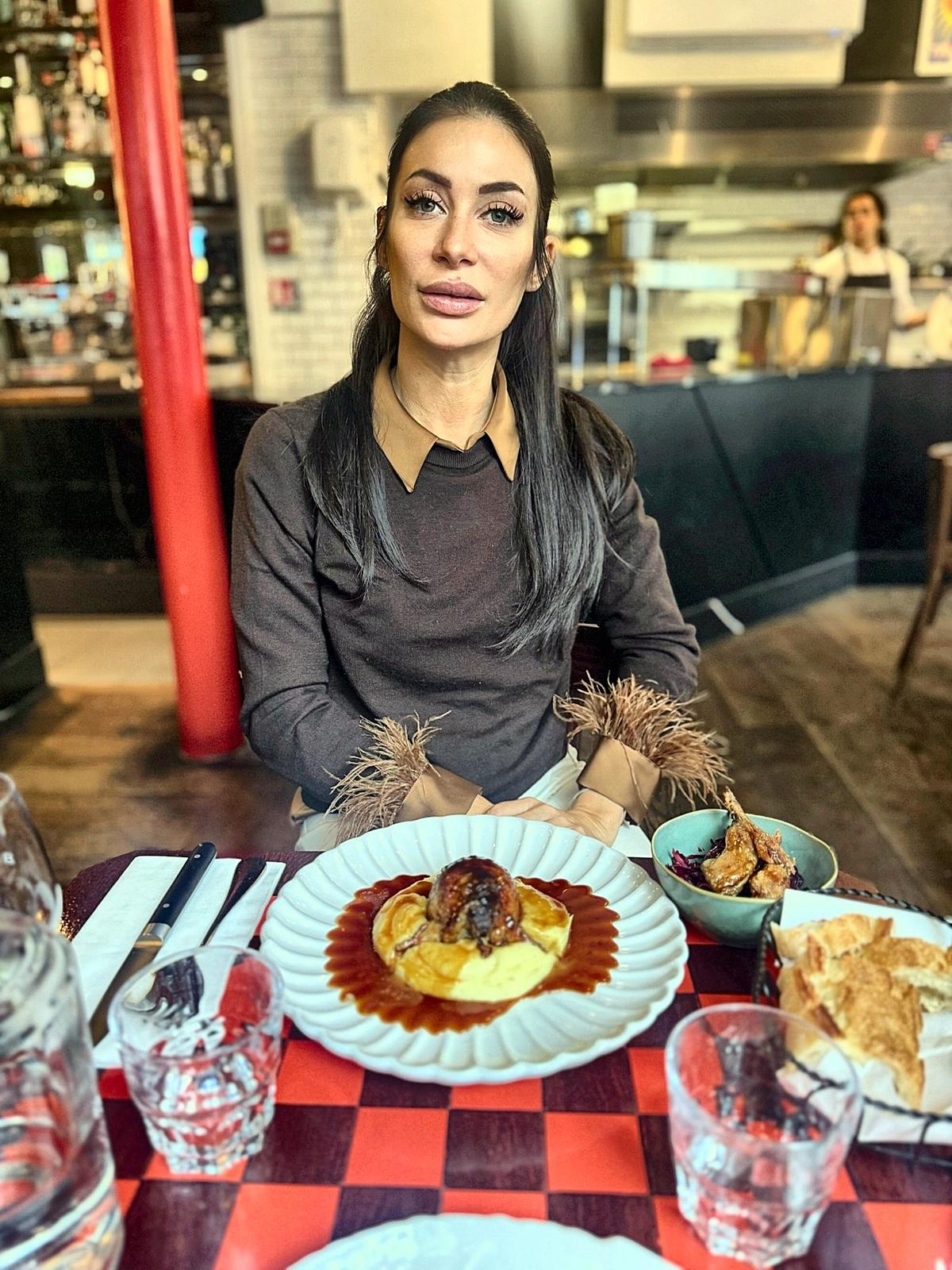
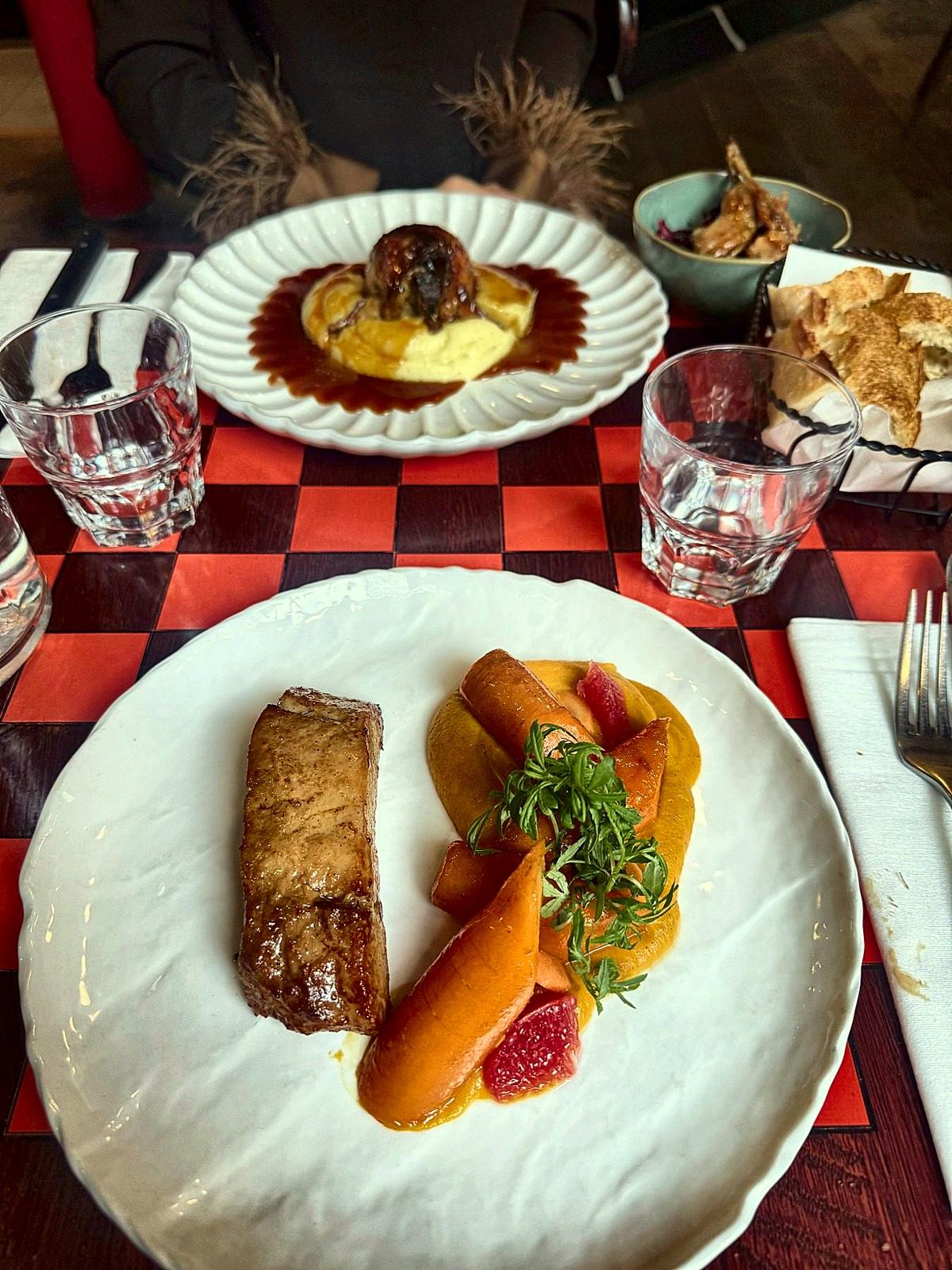
Then came the quail, stuffed with chestnuts and lacquered with a dense, glossy brown sauce, set on a potato purée; the wings arrived separately, on a bed of red cabbage. The quail was sublime, and I recommend it without hesitation. Every plate was precise and generous at the same time; we truly ate divinely.
Quail stuffed with chestnuts on potato purée, the wings on red cabbage
Across the table
Dessert as a journey
The pastry chef, Danielle Ghazal, works with classical techniques but takes her flavours from everywhere: from travel, from people she meets, from the season and from what she feels like making that week. She too has carte blanche. One dessert never leaves the menu: chocolate with caviar, the house ingredient carried all the way to the end of the meal. Alongside it, she keeps familiar flavours for those who want comfort, chocolate and coffee or almond, and more daring creations for those who want to be surprised.
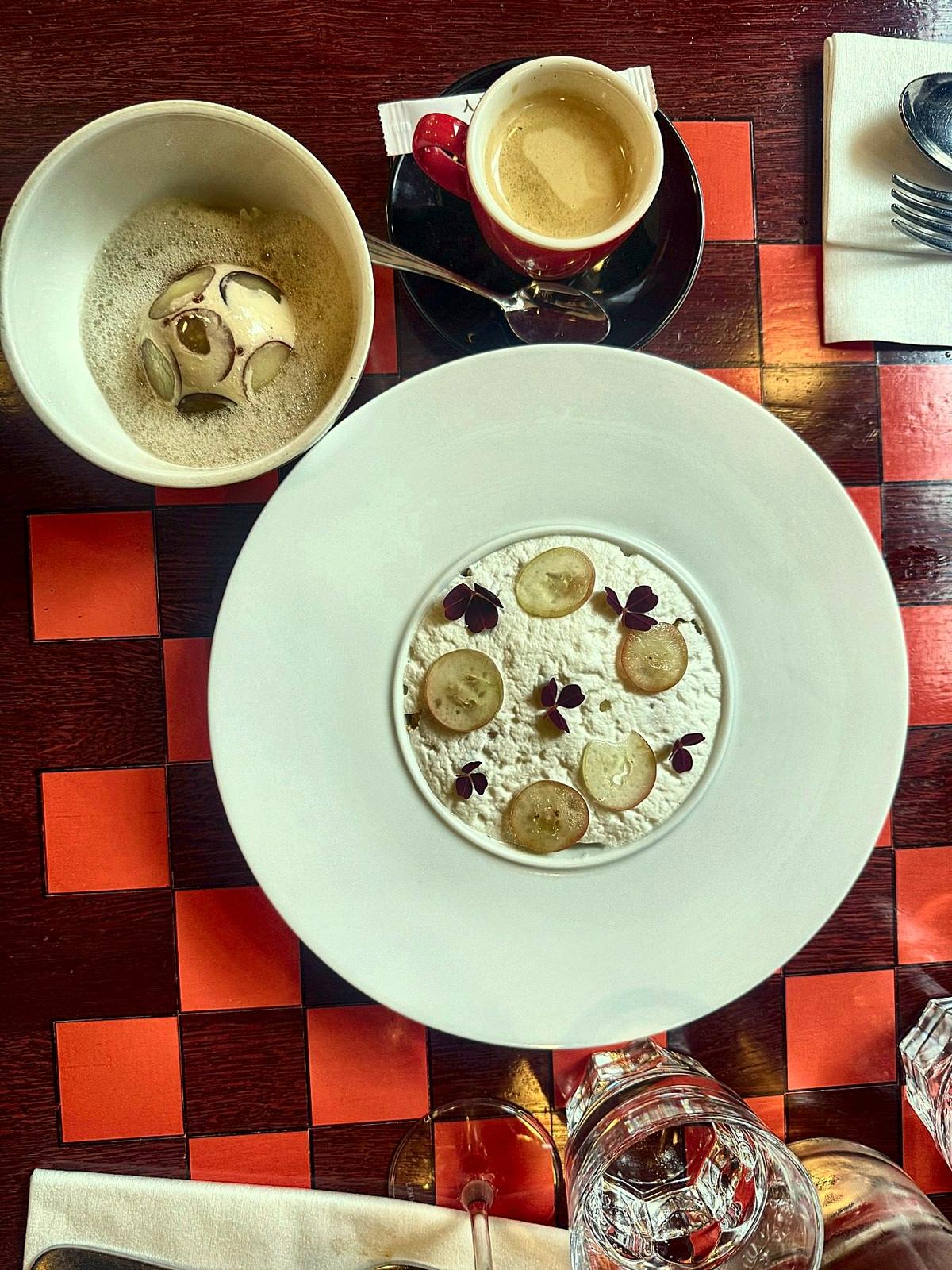
I saved the chocolate and caviar for next time and chose almond instead: an ice cream, then a cremoso layered with a crisp, almonds, an almond espuma on top and grapes. It was theatrical and deeply gourmand.
Almond, grapes and espuma, by Danielle Ghazal
In the dining room, Ryfa Njaay looks after the service: attentive, and genuinely kind. We talked over coffee before I left.
Noon and night
At lunch, the Comptoir is a neighbourhood table: people from nearby offices come for the menu of the day, quick and seasonal. In the evening it changes character and becomes livelier, with a five-course tasting menu that brings dishes from the carte in smaller portions. The night is clearly when this bistro comes fully alive, yet lunch is worth the detour, if only for the chance to taste this kitchen in daylight and talk to the people behind it.
I left with the feeling that I had only opened the door. I want to come back for dinner, and to hear Charles himself tell the story of the caviar.
Caviar, the book by Charles de Saint Vincent
The address
Name
Le Comptoir Boutary
Address
32 rue Catherine-de-la-Rochefoucauld, 75009 Paris
Neighbourhood
9th arrondissement, between Pigalle and Saint-Georges
Phone
+33 1 53 16 44 56
Web
comptoir-boutary.com
Why go
The smoked potato with Maison Boutary caviar, an Italian touch on French bistro cooking, theatrical desserts
Hours
Lunch Wednesday to Friday, 12–2pm · Dinner Tuesday to Saturday, from 7pm · Closed Sunday and Monday (Michelin Guide; check before booking)
On rue Rennequin, an architect turned chef serves one of the few truly gourmet vegan tables in Paris, under a ceiling of living moss and in his mother’s name.
By Tanja Audemars
Selected on merit and in collaboration: I was a guest of Le Potager de Charlotte, and lunch for two was offered. My judgement, as always, is my own.
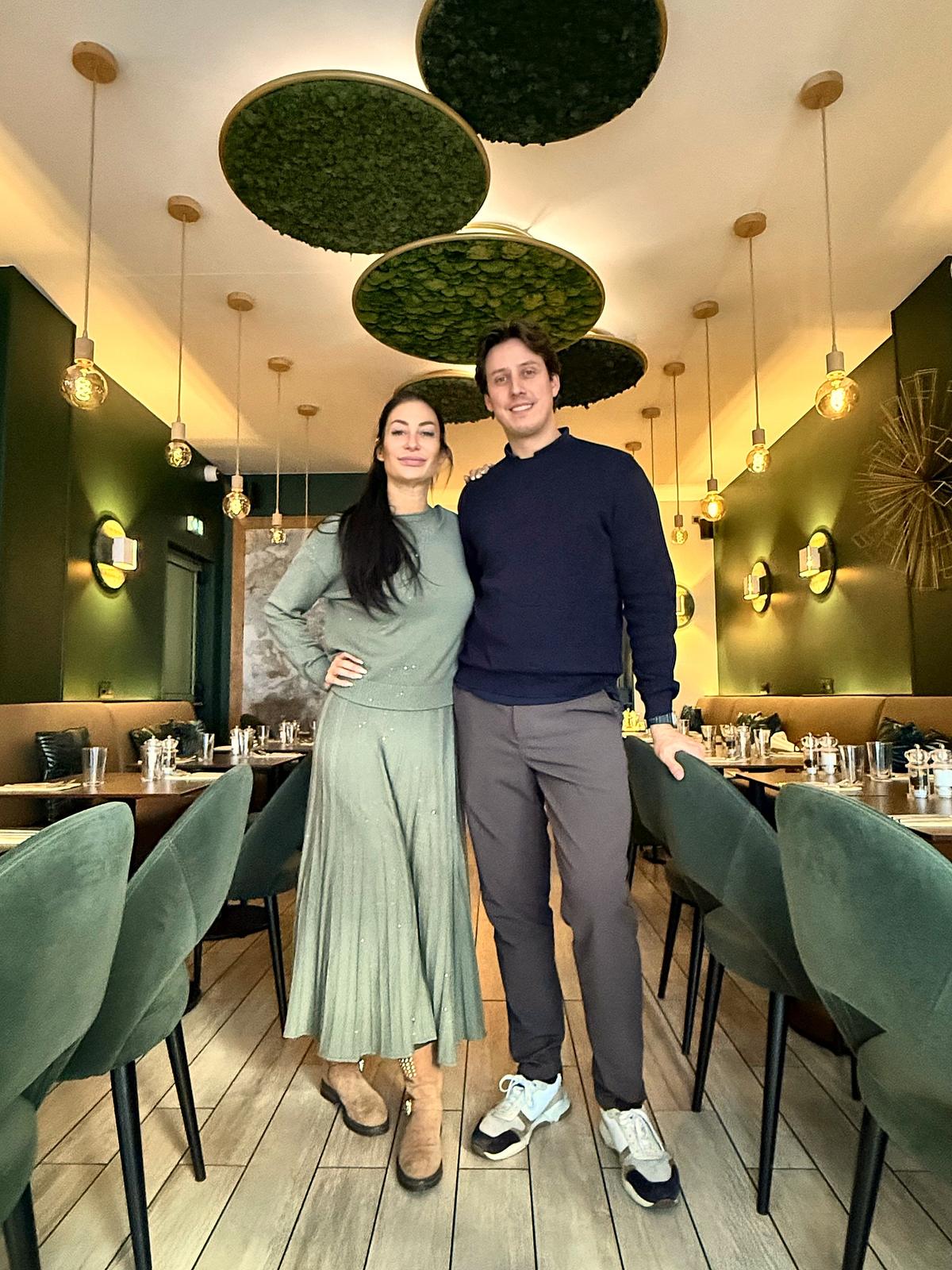
The dining room, rue Rennequin
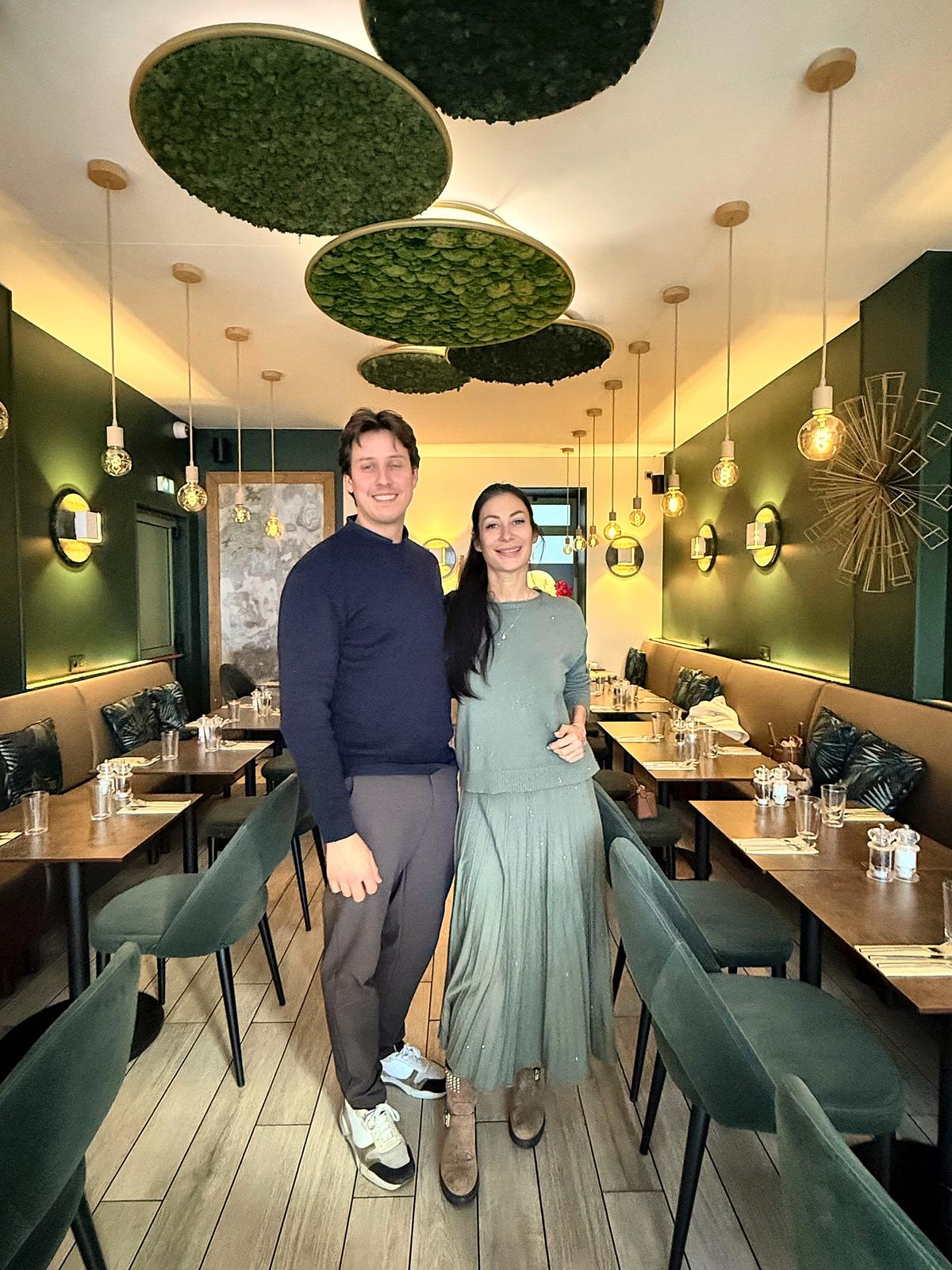
There is a word David Valentin keeps coming back to, and it is not “vegan”. It is bon vivant. In France, he tells me, plant-based cooking still carries an image of grains and a small salad, of something virtuous and a little sad. His whole kitchen is built against that idea: generous plates, real appetite, the pleasure of the table first, and the convictions underneath.
At the next table, a group of Japanese guests was celebrating a birthday under the ceiling of living moss; around the room I heard four or five languages. It says a lot about this address: people cross the world, and Paris, to eat here.
A family table
Le Potager de Charlotte is a family house, opened by the brothers David and Adrien Valentin in 2015 on rue de la Tour d’Auvergne in the 9th; this second address, in the 17th, followed. David is the chef of both and runs their kitchens, stock and menus, moving between the two; his brother Adrien works alongside him on management and coordination.
David did not start out as a cook. He trained as an architect before becoming a chef, and you can feel it: he thinks in structure, volume and composition. The conviction came first, from the family — respect for animal life, for the environment and for human health, the three pillars he describes — and the restaurant followed. When they first presented a fully plant-based project, the banks were not convinced it could work in France. It did.
What makes the house unique is the meeting of two minds. David brings the architect’s eye; Adrien, a naturopath by training and passionate about nutrition, brings the knowledge to balance every plate. Together they make dishes that are not only good, but good for you, contributing to the wellbeing of the environment and of the people at the table.
With David Valentin, under the ceiling of living moss
Why Charlotte
Then there is the name, which almost every guest asks about. Charlotte is David’s mother. She supported her sons when they launched the concept; she does not work in the restaurant, but the house carries her name. He wanted a name that was French, nothing anglicised, and one with a little legend to it: the potager, the kitchen garden, and the woman who helped build it. Charlotte is also one of the great names of French pâtisserie, the very vocabulary of gourmandise. One day, he muses, the house might simply be called Charlotte, or Charlotte Café. For now, Le Potager de Charlotte says it all: the garden, the family and the pleasure of the table.
Une cuisine simple et saine.David Valentin, chef
Simple, never simplistic
Paris has some 23,000 restaurants. By David’s count, only about five of them are fully vegan and truly gourmet, and Le Potager de Charlotte is the only one of those at an accessible price.
The rule is simple and healthy: no industrial products, no hydrogenated fats, no imitation of meat or butter. Eat colour, he says. The vegetables arrive fresh every morning, and what makes it gastronomy is the work on flavour, texture, colour and volume, so that the eye eats before the palate. The kitchen is entirely gluten-free: the bread comes from an artisan baker, precisely to keep flour out of the kitchen.
The menu is short on purpose and changes four times a year. A few signatures stay through every season, among them the marinated tofu; around them, vegetables you can see, and a hummus that feeds other preparations so that almost nothing is wasted. Beyond recycling, they practise upcycling, and they have gone to the very heart of the subject, in complete respect for people, for animals and for energy. Mushrooms grown in Paris, lentils, cabbages and root vegetables come from Île-de-France; coffee and chocolate are fair trade.
What we ate
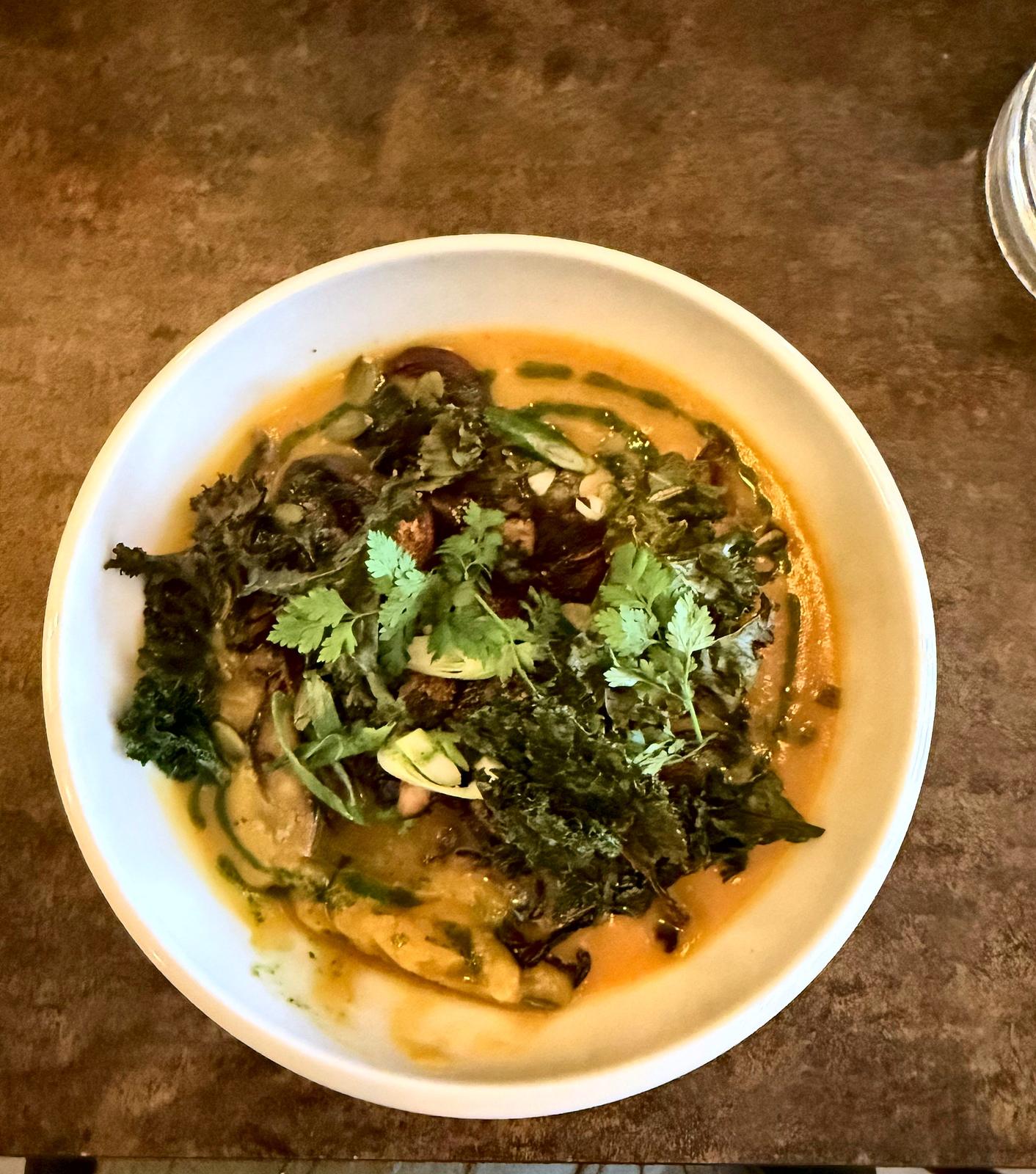
We began with pumpkin and hummus, then the marinated tofu. We went on with the garden salad and the lentils, served in a little pot so that at first glance they looked like a soup. Every dish was an explosion of flavour. It was a magnificent gastronomic experience, a little magic for the palate, and the rare kind of lunch where you leave having enjoyed yourself and done yourself good at the same time.
The lentils, served like a soup
The dessert that explains everything
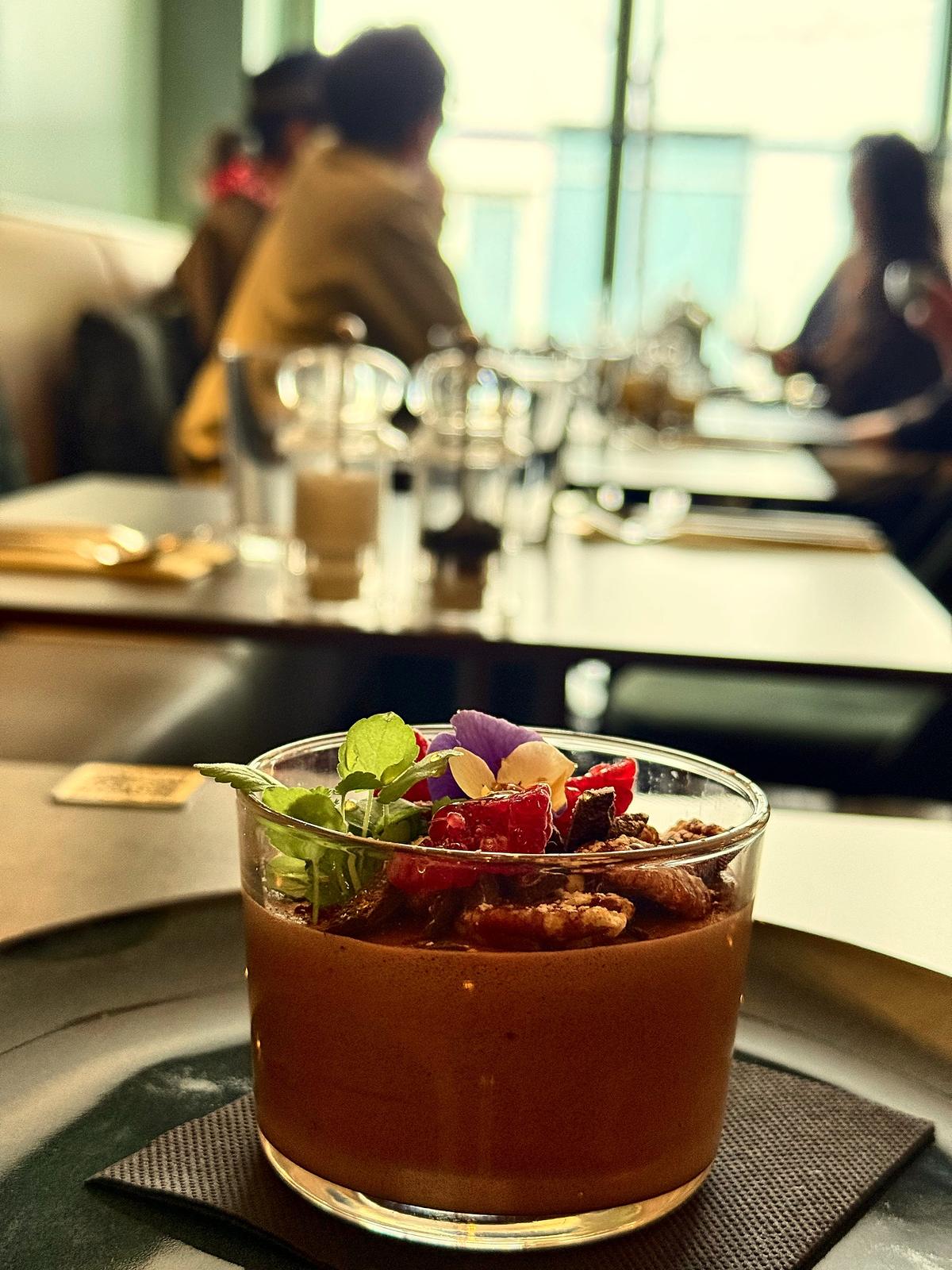
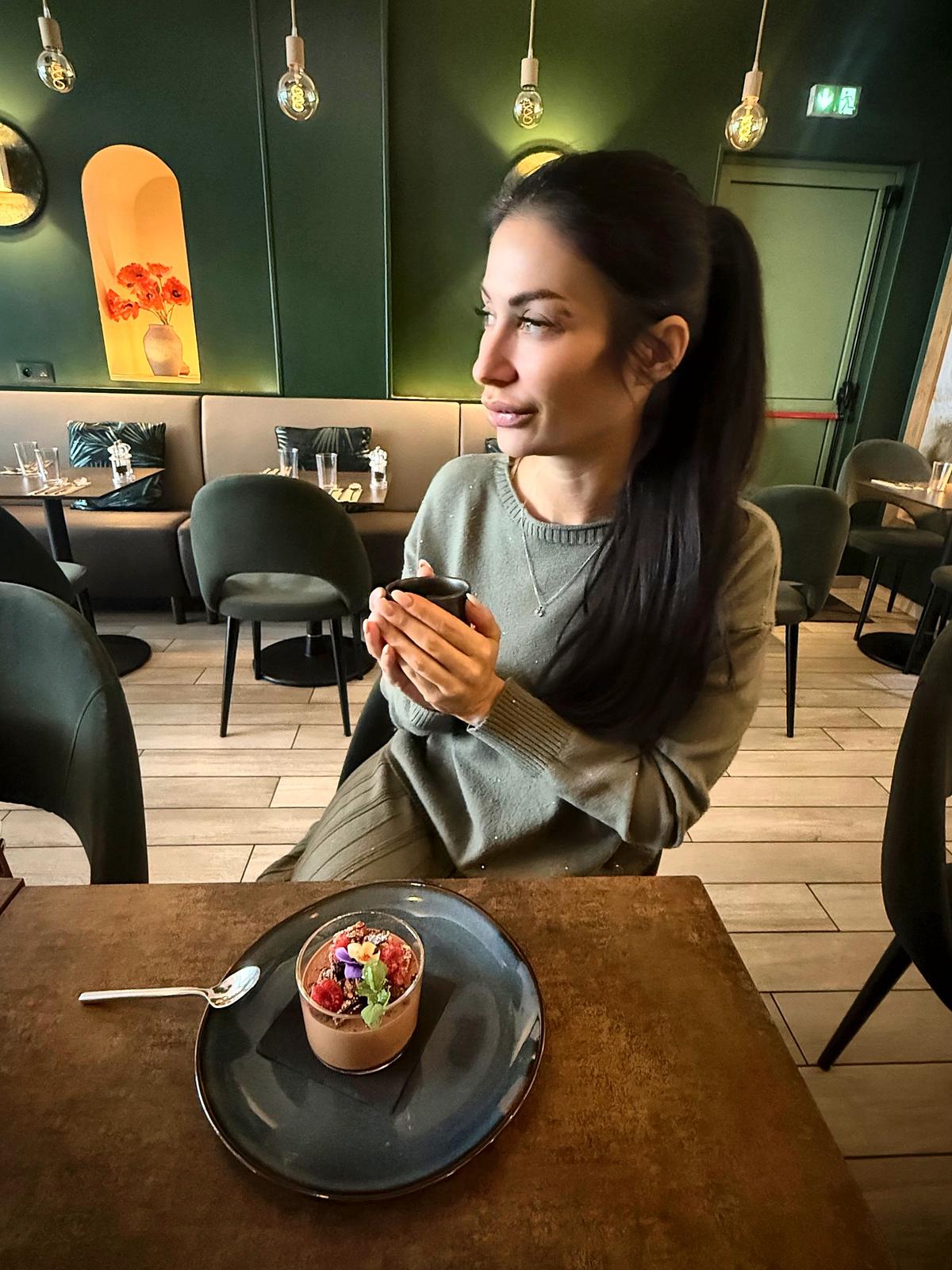
We finished with David’s signature dessert, a chocolate mousse made with 60% fair-trade chocolate and a touch of vinegar. I was sure it was rum. The acidity, he explains, gives structure and length on the palate — the kind of detail that turns a classic into a conversation.
Chocolate mousse, 60% fair-trade chocolate and a touch of vinegar
Who comes here
During the fairs, the fashion weeks and the big sporting events, the first service is international and booked well ahead; the second is French — neighbours, people who work nearby, and at weekends guests who come simply for pleasure. Covid changed how David works: he learned to delegate to his two kitchen teams while keeping the creative line. Next, perhaps, Switzerland, a project he would love to bring there.
My conversation with David drew me deep into the world of vegan gastronomy, and I left grateful to have met them, and glad to discover that places like this exist. It is a magical cuisine, and a healthy one, and what this family has built is exceptional. When David spoke of Switzerland, I was convinced: this is a format that deserves to travel the world. It was a truly sublime moment. I recommend it warmly.
The last spoonful
The address
Name
Le Potager de Charlotte
Address
21 rue Rennequin, 75017 Paris (Métro Ternes, Pereire)
Founded
2015, by David and Adrien Valentin
Also
12 rue de la Tour d’Auvergne, 75009 Paris (Métro Cadet)
Cuisine
Vegan, seasonal, entirely gluten-free
Why go
One of the very few gourmet vegan tables in Paris, and the only one at an accessible price: magical, healthy, every dish an explosion of flavour
Hours, 17th
Dinner Monday to Saturday, 6.45–10.30pm · Lunch Tuesday to Saturday, 12–2.30pm · Sunday brunch 11.30am–3pm
Hours, 9th
Dinner Monday to Saturday, 6.45–10.30pm · Lunch Thursday to Saturday, 12–2.30pm · Sunday brunch 11.30am–3pm
In a Marais townhouse, the restaurant that first dared to build a whole meal around the sweet course is writing its next chapter, with chef Édouard Ogier cooking in front of you.
By Tanja Audemars
Selected on merit and in collaboration: I was a guest of Dessance. As always, my opinions are my own.
The dining room, rue des Archives
When I was a child, at every buffet I went straight to the desserts and ate nothing else. So when I first read about a restaurant in Paris built entirely around the sweet course, I knew I would end up at its table.
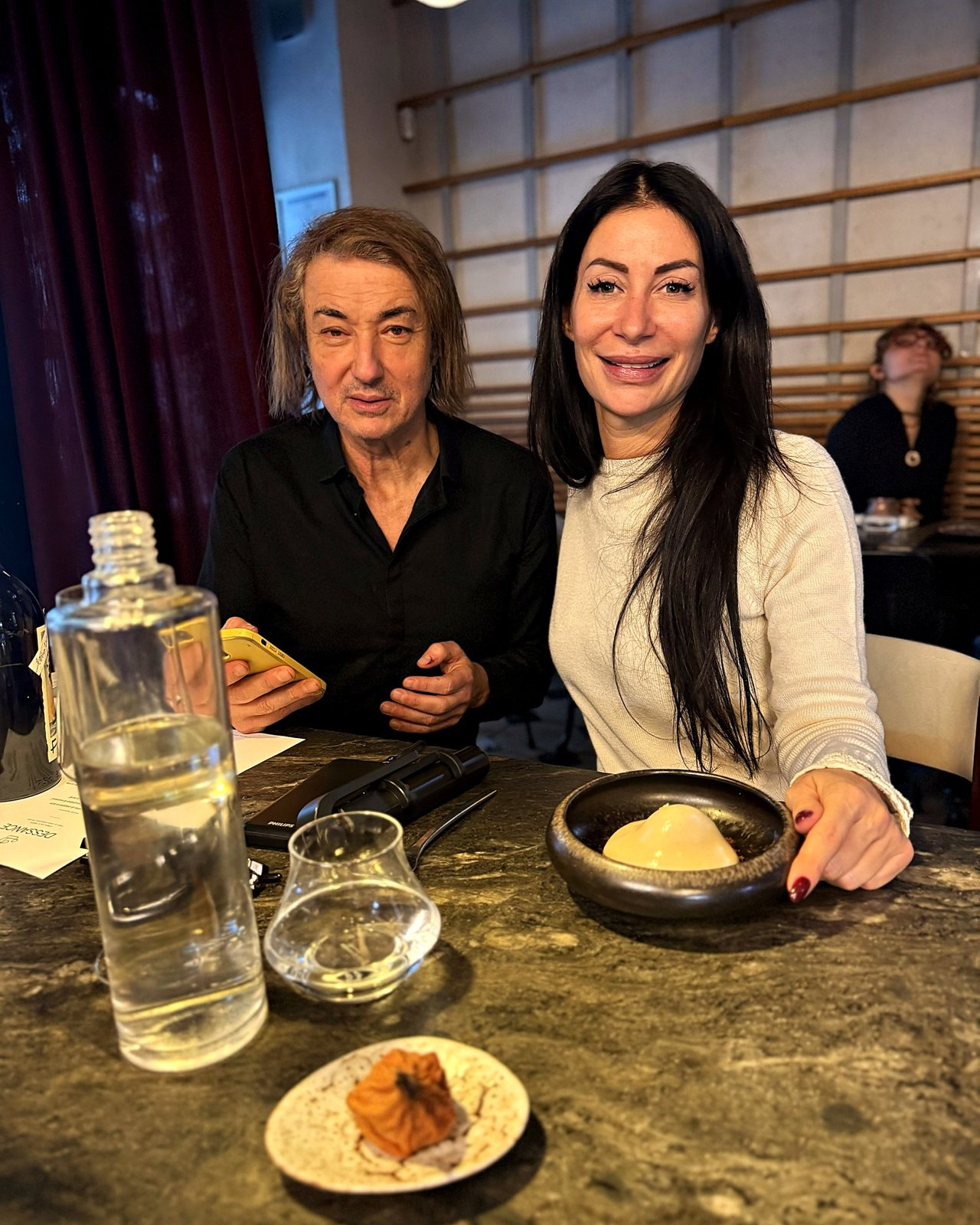
Dessance opened in 2014 at 74 rue des Archives, in the upper Marais, and it was the first restaurant in Paris to treat dessert as a gastronomic meal of its own: not a pastry shop, not a tea room, but a dessert bar where the courses move between sweet and savoury, with herbs, vegetables and spices balancing the sugar. It was created by Philippe Baranès, the restaurateur behind Braisenville.
The room is part of the pleasure. Dessance lives in a former hôtel particulier, under a very high ceiling, and the light and the greenery give it the feeling of a winter garden.
A painter who studied economics
The story of the house begins with the story of its founder. His family comes from Tuscany, and among his ancestors, he tells me, is Amedeo Modigliani. Art has always been his first love: he paints, and before we sat down he showed me his canvases, which are wonderful. As a young man he told his father he wanted to become a painter. His father’s answer was firm: study economics first. So he did, and then he went on to build restaurants. Looking at Dessance, I think the painter never left: a meal composed like a canvas, where sweet and savoury are colours on the same palette.
The open kitchen, at the heart of the room
The renaissance of dessert
What I heard most in our conversation was the idea of fusion: a savoury chef and a pastry chef working side by side, so that the line between the two worlds blurs. The menus change almost every week, as new products arrive and new recipes are tested, and there is always a vegetarian path through the meal. The guests are both Parisians from the neighbourhood and travellers from all over the world.
The chef: Édouard Ogier
Édouard Ogier learned his trade in the great houses of Paris, at La Réserve, in palace kitchens and two-Michelin-star dining rooms, where the days began in the early morning and ended close to two at night. He then set out to open his own restaurant, and the pandemic stopped him. He arrived at Dessance through a chef friend, who asked around for someone to take over the kitchen.
For him, Dessance is a gastronomic restaurant in the full sense of the word, and he cooks it that way. He cares about vegetarian guests in a way that is still rare in Paris: for him the vegetarian menu is not a list of dishes with the meat taken out, but a cuisine of its own. He works with local, seasonal produce and adapts to the weather and the market.
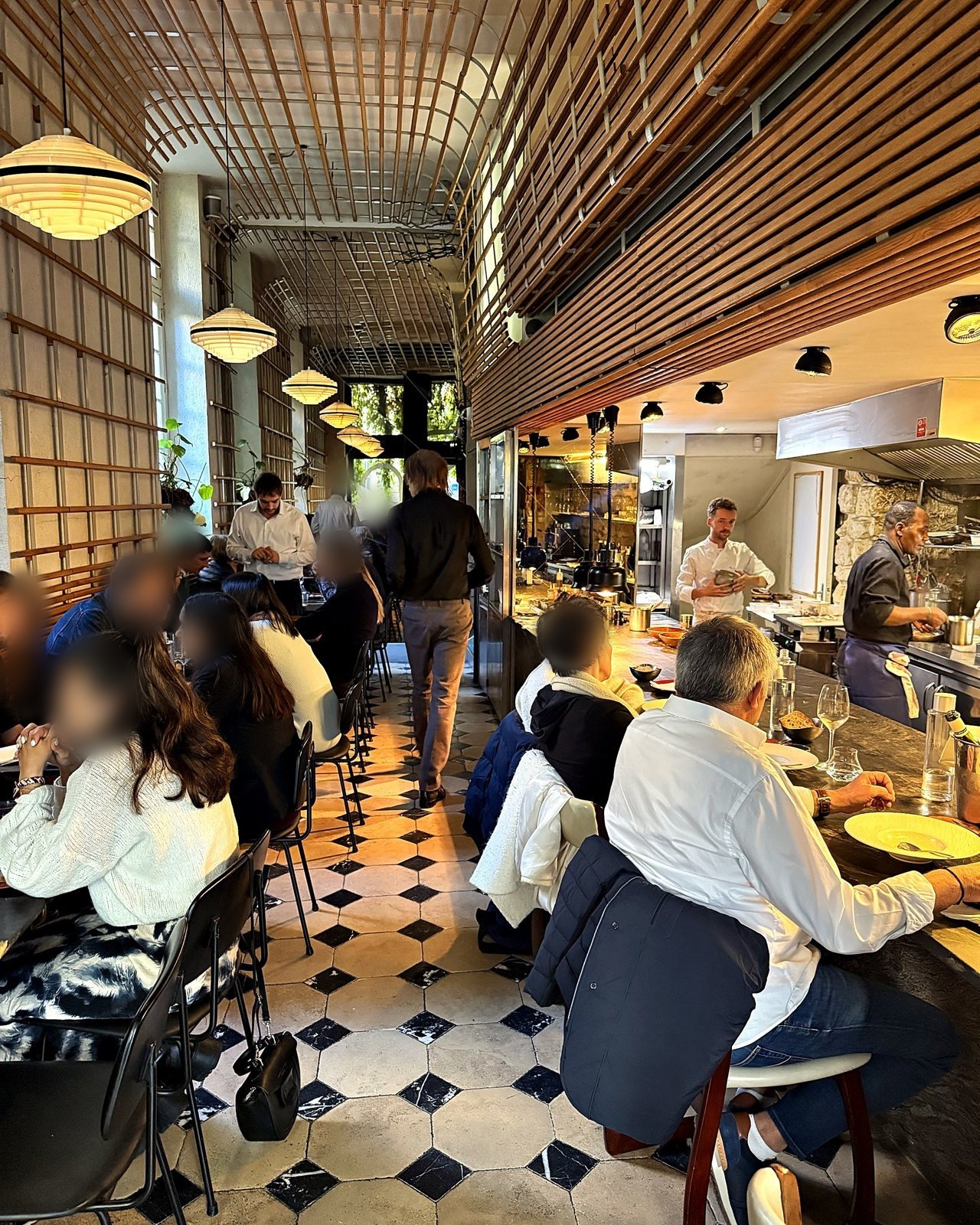
A surprise, cooked in front of you
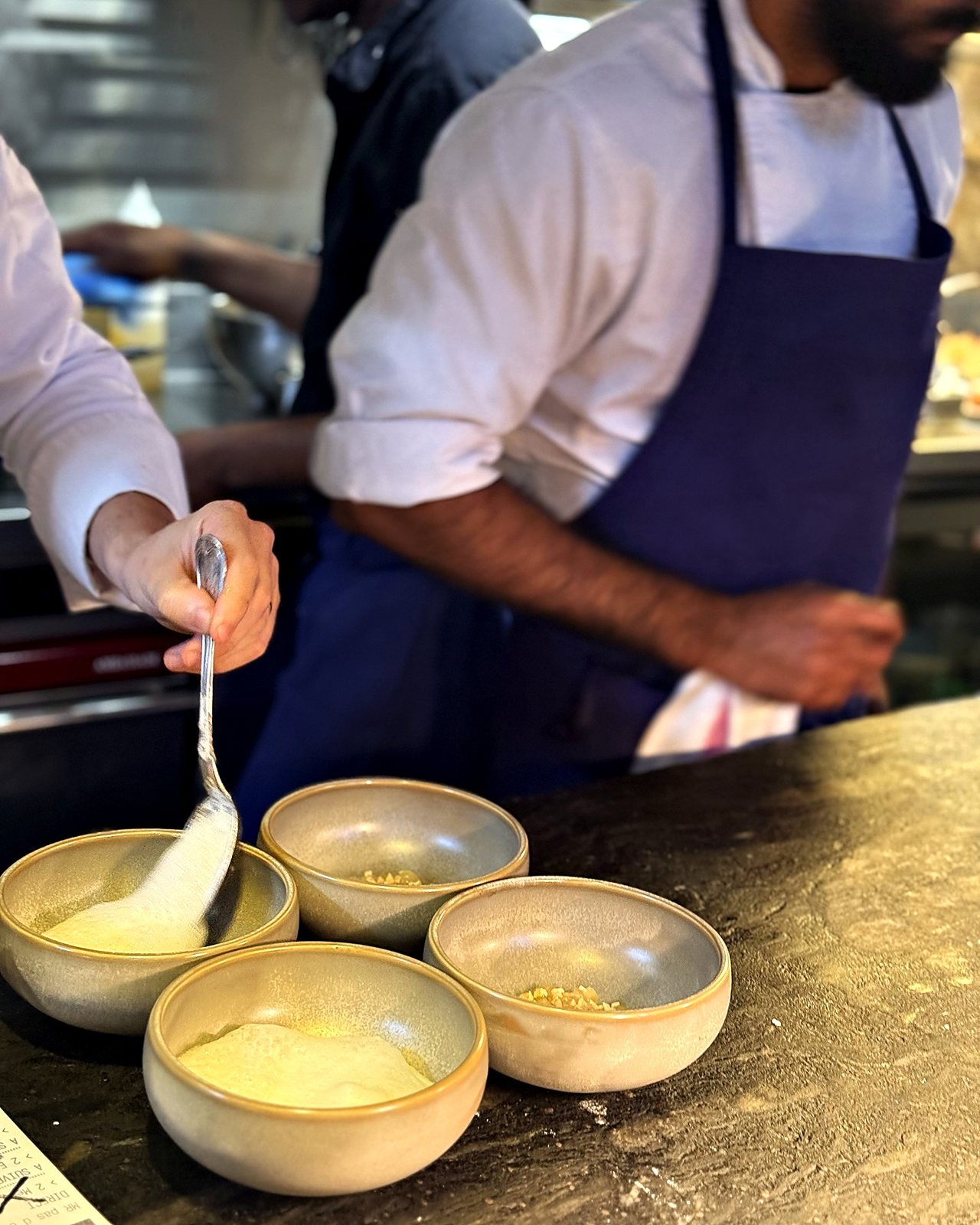
At Dessance the menu arrives as a surprise: in the evening it is a carte blanche, and you let the chef decide. But the real experience is watching him do it. The kitchen is open, and if you choose, you sit right in front of it and see Édouard work, plate after plate, as if the meal were being performed just for you. There is a conviviality in that counter that a closed dining room can never give.
Plating at the counter
What we ate: lunch and dinner in six times
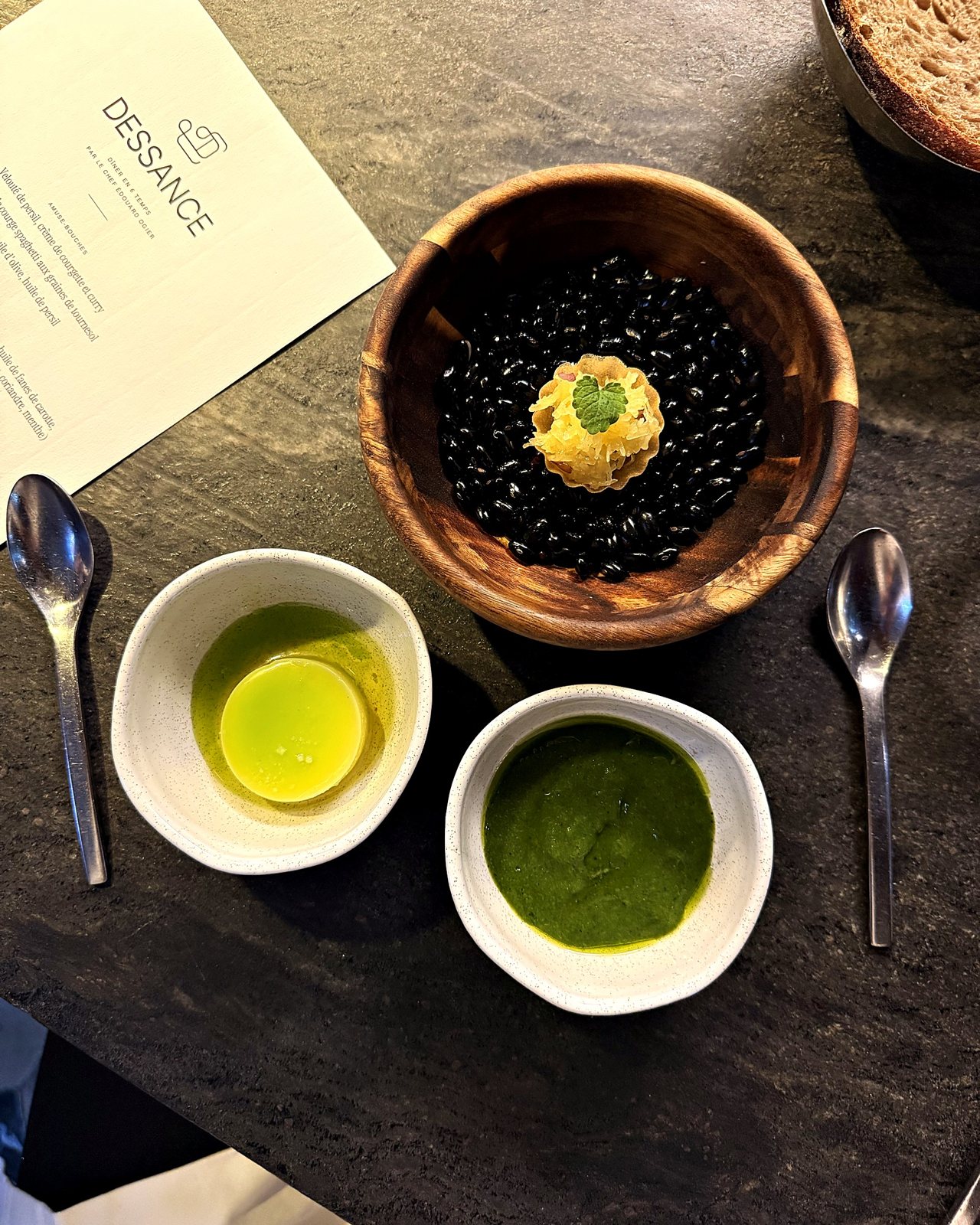
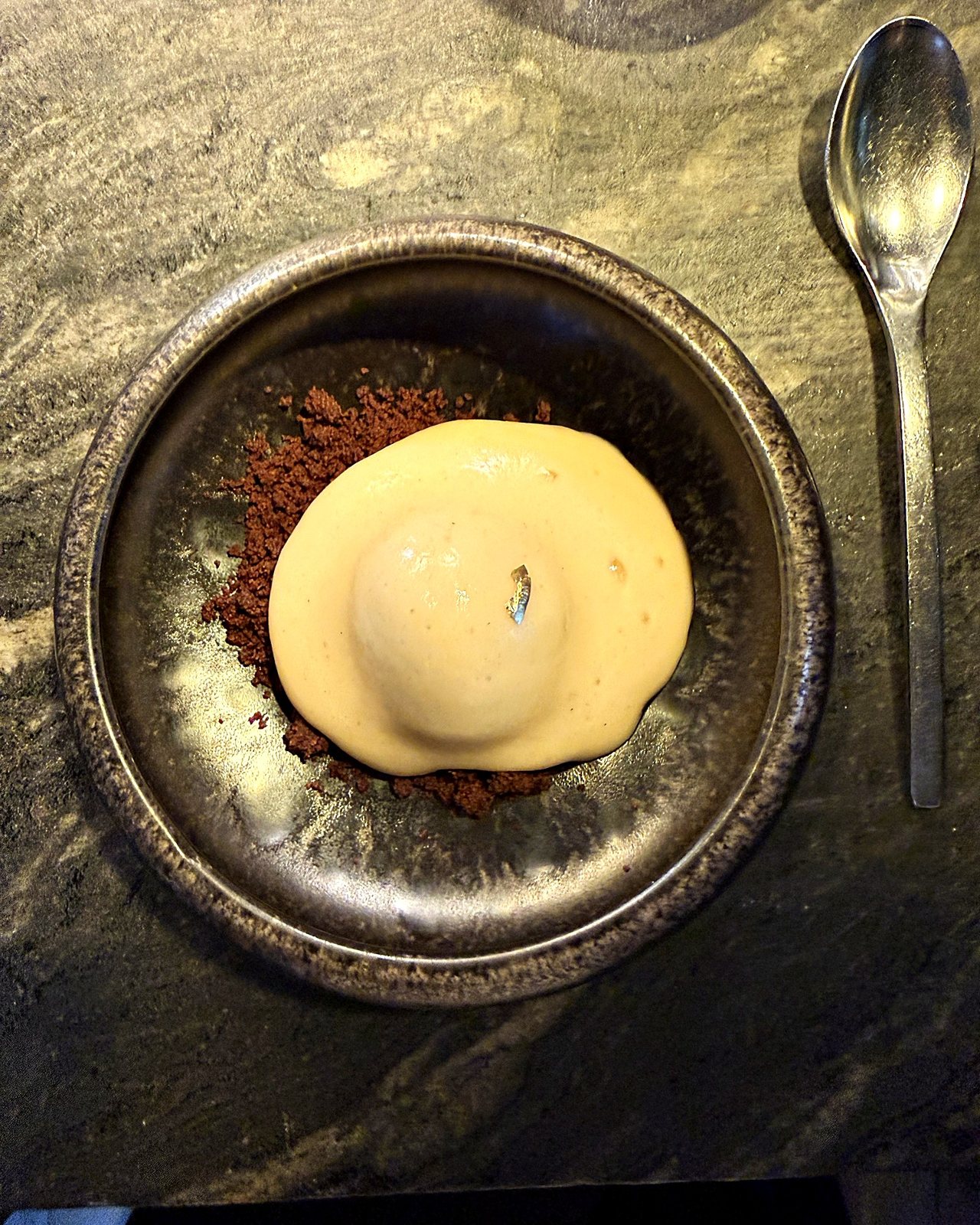
On Saturdays, lunch follows the evening menu en 6 temps, the same six courses served at dinner, and it read like an autumn garden. It opened with three amuse-bouches: a parsley velouté with courgette cream and curry, a little tartlet of spaghetti squash with sunflower seeds, and an ice cube of olive oil with parsley oil.
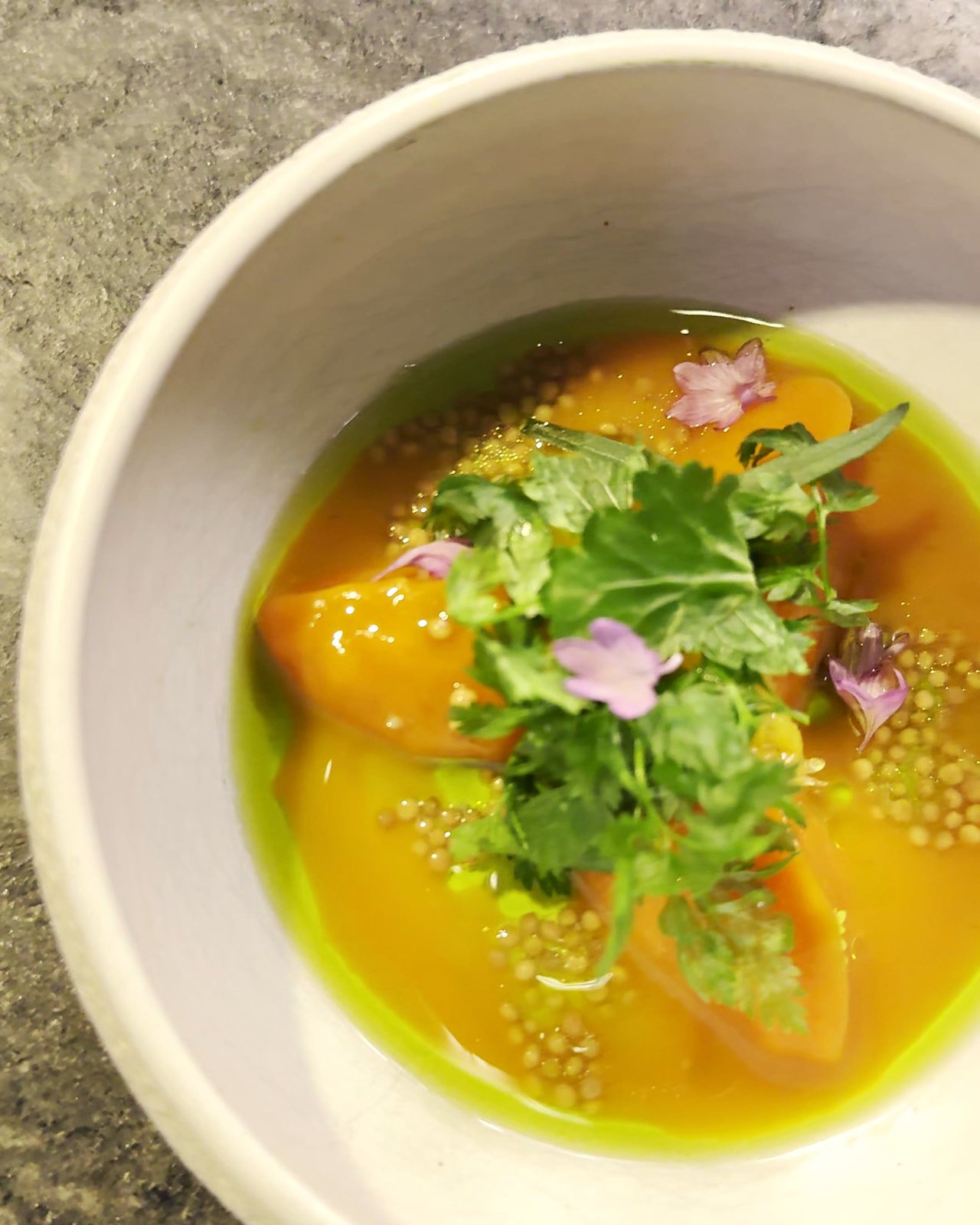
Then the carrot: a carrot mousseline with pickled mustard seeds, carrot-top oil, an orange vinaigrette and a handful of chervil, tarragon, coriander and mint.
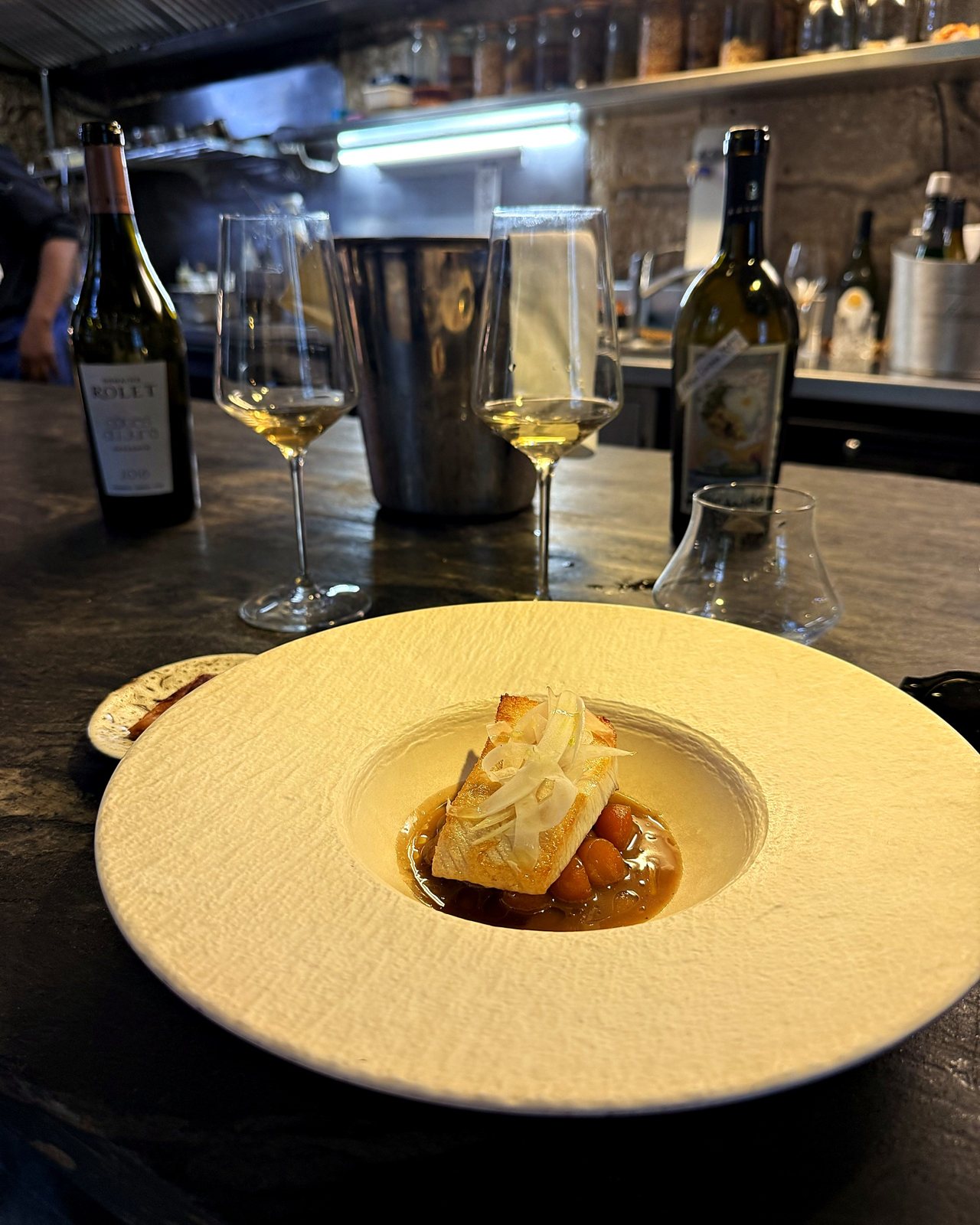
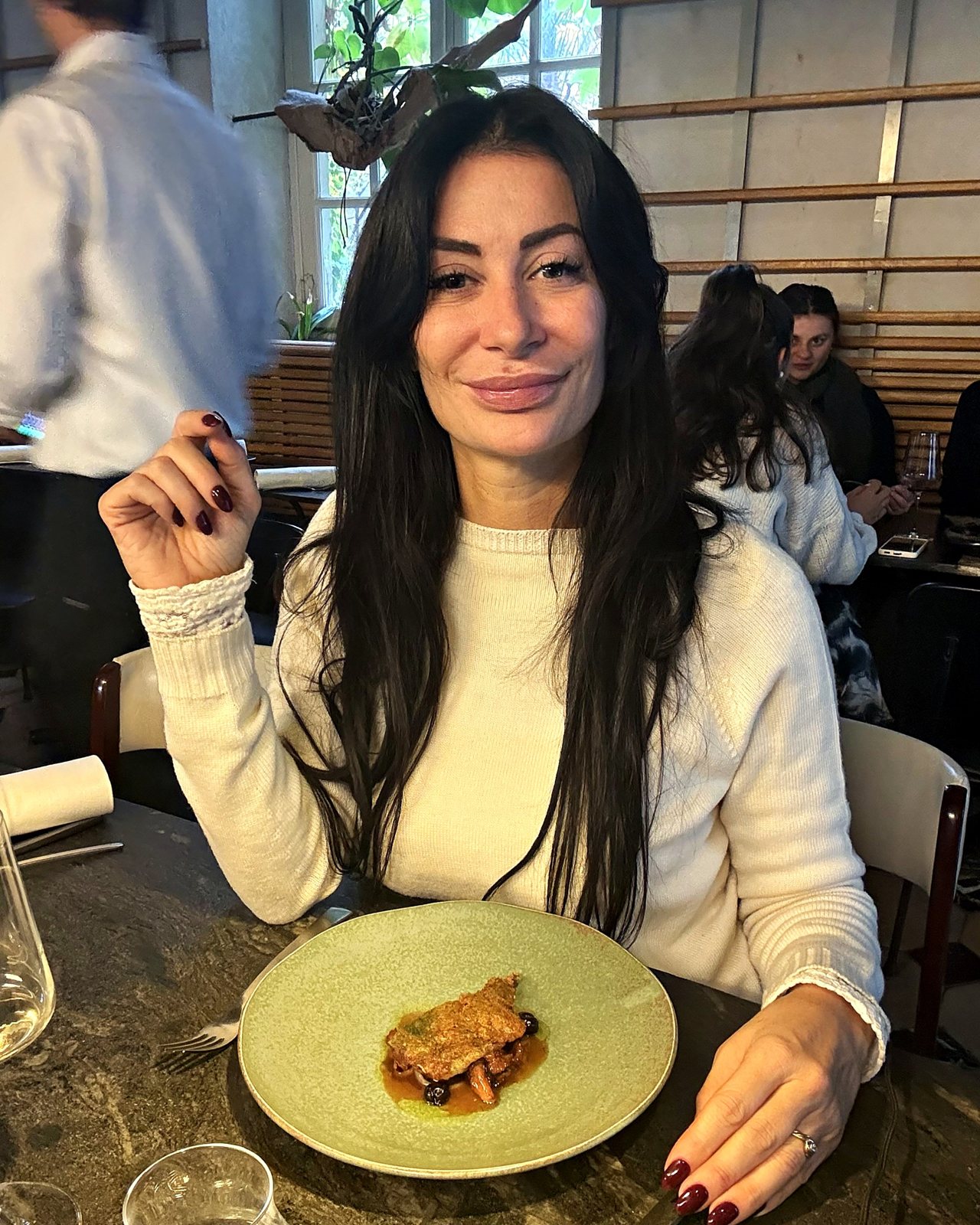
After it, brown butter and a siphoned potato cream with caviar, and a risotto of Japanese pearls with celery in several textures, crushed hazelnuts, aged Comté and an emulsion of Morteau sausage. The mains brought the sea and the land: seared amberjack on a butternut navarin with lobster bisque, raw fennel and a smashed croissant; then a crisp quail cooked on one side only, with girolles in their jus, pickled blueberries and mint oil.
The amuse-bouches · Amberjack, butternut navarin and lobster bisque
The quail, girolles and pickled blueberries
And then the reason the house exists, two desserts: a concentrated pear with bergamot sorbet and timut berries, and candied quince with a quince siphon, chestnut ice cream and a cocoa sablé breton. To finish, mignardises: a vegan chocolate truffle, a peach pâte de fruits and a pear infused with black tea.
For me, Dessance is a mix of beauty, entertainment and gastronomy. Beauty, in a room that feels like a winter garden. Entertainment, in a chef cooking live a few steps from your plate. And gastronomy at the very highest level, because the hands at work learned their craft in two-Michelin-star kitchens. It is not just a dinner, it is an experience.
With Philippe Baranès
The address
Name
Dessance
Address
74 rue des Archives, 75003 Paris
Neighbourhood
Le Marais, 3rd arrondissement
Founder
Philippe Baranès
Chef
Édouard Ogier (formerly La Réserve, Paris)
Concept
The first gastronomic dessert restaurant in Paris (2014); today a surprise six-course dinner by the chef, with a vegetarian path, and an open kitchen you can sit in front of
Recognition
Listed in the Michelin Guide
Why go
A surprise menu cooked in front of you by a palace-trained chef, in the city’s original dessert restaurant, a Marais townhouse that feels like a winter garden
Hours
Lunch Thursday to Saturday, 12–2pm · Dinner Tuesday to Saturday, from 6.30pm, in two services
Prices
Carte blanche in six courses, €82 (Land & Sea, vegetarian, or vegan on 48 hours’ notice) · Wine pairing, four glasses, €44
A-List Tables · French Bistrots · On merit · Paris, 11th arrondissement
Le Chardenoux, a 1909 room, intact
A Belle Époque bistrot in the 11th, its decor listed as a historic monument, with Cyril Lignac in the kitchen.
Selected on merit by the A-List Atlas editors, from the major guides and awards. Not a hosted visit.
The bistrot spirit · Temporary image: Pexels
Le Chardenoux is one of those rooms Paris protects: its 1909 decor is listed among the city’s historic monuments, and stepping inside is stepping into the bistrot as it was imagined at the start of the last century.
Today the kitchen belongs to Cyril Lignac, and the cooking keeps to the generous French classics the room deserves. The Michelin Guide 2026 lists it among its selected restaurants.
A-List Tables · French Bistrots · On merit · Paris, 2nd arrondissement
Aux Lyonnais, a bouchon since 1890
A Lyonnais bouchon of 1890 near the Bourse, in the hands of the Dumant family since 2025.
Selected on merit by the A-List Atlas editors, from the major guides and awards. Not a hosted visit.
The bistrot spirit · Temporary image: Pexels
Aux Lyonnais has been feeding the 2nd arrondissement since 1890: a bouchon in the Lyonnais tradition, a short walk from the old Bourse, with a room that wears its age with pride.
Since 2025 it has been in the hands of the Dumant family. The Michelin Guide counts it among its “Iconic” addresses, and Gault&Millau gives it 12/20.
A-List Tables · French Bistrots · On merit · Paris, 1st arrondissement
La Poule au Pot, the bistrot as it should be
A 1935 room in Les Halles, and the bourgeois classics cooked with rare nobility by Jean-François Piège.
Selected on merit by the A-List Atlas editors, from the major guides and awards. Not a hosted visit.
The bistrot spirit · Temporary image: Pexels
Opened in 1935 as a late-night refuge for the market traders of Les Halles, La Poule au Pot has been in the hands of Élodie and Jean-François Piège since 2018. The room is as it was: mirrors, woodwork, moleskin banquettes, a zinc counter and copper plaques bearing the names of famous regulars.
The kitchen cooks the bourgeois classics with rare nobility, from onion gratinée and veal blanquette to beef tartare prepared at the table, with a dessert trolley to finish. Gault&Millau honoured it with its Tradition d’Aujourd’hui trophy for Paris Île-de-France in 2025.
A-List Tables · French Bistrots · On merit · Paris, 4th arrondissement
Benoit, a lesson in heritage
Founded in 1912 near the Hôtel de Ville, one of the most complete period bistros in Paris, now in a young chef’s hands.
Selected on merit by the A-List Atlas editors, from the major guides and awards. Not a hosted visit.
A period dining room · Temporary image: Pexels
Founded in 1912 a few steps from the Hôtel de Ville, Benoit remains one of the most complete period bistros in Paris: woodwork, copper, mirrors, velvet banquettes, down to the monogrammed “B” on the plates.
Since 2022, chef Kelly Jolivet has led the Maison Ducasse kitchen, keeping faith with pâté en croûte, calf’s head ravigote, cassoulet and millefeuille. It is a lesson in how heritage, served without irony, can still feel generous and alive.
The tables, the stays and the evenings of each edition, arranged for you.
Every address in A-List Atlas has been chosen with care. The Conciergerie will be the way to go from reading to living it: a table at one of our A-List Tables, a room at one of our A-List Stays, an invitation to the season’s galas, a private visit to an atelier or a house.
We are preparing it with the places of the Paris Edit. In the meantime, write to us on Instagram and we will answer personally.
Swiss entrepreneur and high-end communication consultant, founder of Tcommunication Swiss SA and of Champagne Audemars. She visits the places, meets the people and signs every edition.
The A-List Atlas Studio
An AI-assisted editorial team, directed by Tanja Audemars. Its members are AI assistants, not human journalists: they research, draft, check, design and plan under her supervision. Nothing is published without Tanja’s approval.
Managing Editor
AndreaAI assistant
Coordinates the studio, plans each city edition and keeps the editorial calendar.
Senior Writer
EmilyAI assistant
Drafts features and A-List selections from Tanja’s notes, reviews and first-hand experiences.
Copy Editor
JulianAI assistant
Checks facts, names, addresses, dates and tone before anything is published.
Photo Editor
MatteoAI assistant
Selects, organises and retouches Tanja’s photography for the magazine and social channels.
Art Director
SofiaAI assistant
Shapes the visual identity: covers, layouts and the watercolour-and-photography signature.
Social Media Manager
MargauxAI assistant
Turns each story into posts, carousels and reels for Instagram and Facebook.
SEO Specialist
SeoAI assistant
Makes every story easy to find on Google: titles, descriptions, keywords and languages.
Business Development
LeonardoAI assistant
Builds partnerships, sponsorships and advertising opportunities for the magazine.
Partnerships
Collaborations & Founding Partners
Hosted experiences and paid partnerships are always disclosed next to the story, and never guarantee a favourable review.